
AI in Recruiting

Minahil Mansoor

Last updated:
July 2026
Read time:
10
mins
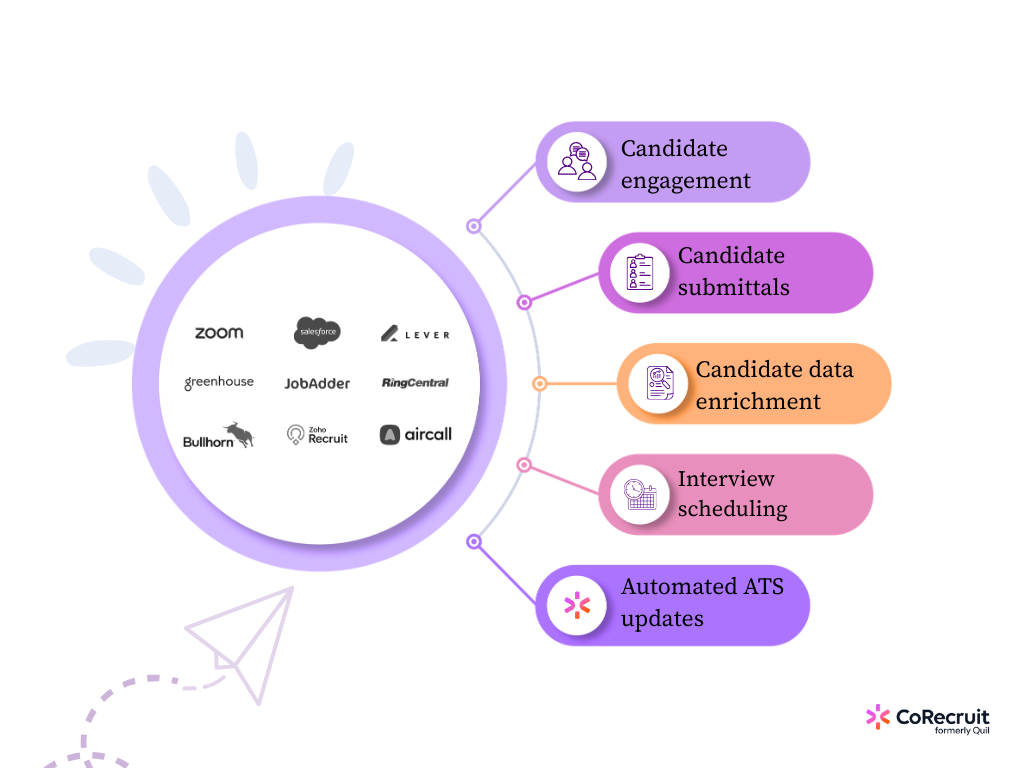
Recruitment agencies scale beyond the limitations of an Applicant Tracking System (ATS) by layering specialized AI tools—specifically AI note-taking, automated submittal generators, and data enrichment—on top of their existing tech stack. While an ATS serves as a vital system of record, it creates a "manual data gap" where 70% of candidate data is often lost or unsearchable. By integrating purpose-built AI, agencies can automate repetitive tasks, recover up to 8 hours of recruiter time per week, and eliminate the cost of rediscovering candidates already present in their database.
From a recruiter’s perspective, the skepticism about AI is understandable. After all, they faced the same uncertainty when ATS technology first changed how candidates were tracked and managed.
But AI is not something that’ll replace recruiters or the judgment they’ve developed over the years. Instead, it’s here to help fast-track the processes recruiters find repetitive and meaningless.
To help agencies adopt AI-first practices, we’ll break down the key ways to combine your ATS with AI and much more.
While an ATS is essential for workflow visibility and compliance, it is a passive tool that organizes information but does not create it.
Your ATS helps with:
But ATS platforms still have significant gaps when it comes to automation:
In other words: your ATS organizes information beautifully, but it doesn’t create it.
That leads to a gap that leads to two main issues:
1. The first is time: manual data entry, note-taking, and document formatting that adds up to hours every week.
2. The second is money. Recruiters end up duplicating effort, and businesses pay more to rediscover candidates they've already met.
Specializing in a niche, whether it’s healthcare, tech, finance, or executive search, positions your agency as the go-to expert.
Clients trust agencies that understand the nuances of their industry, and candidates are more likely to engage with recruiters who speak their language.
This helps in ways like:
How to get started:
While an ATS organizes candidate data, it still leaves recruiters doing hours of repetitive work: note-taking, interview follow-ups, updating records, and creating client-ready candidate submittals.
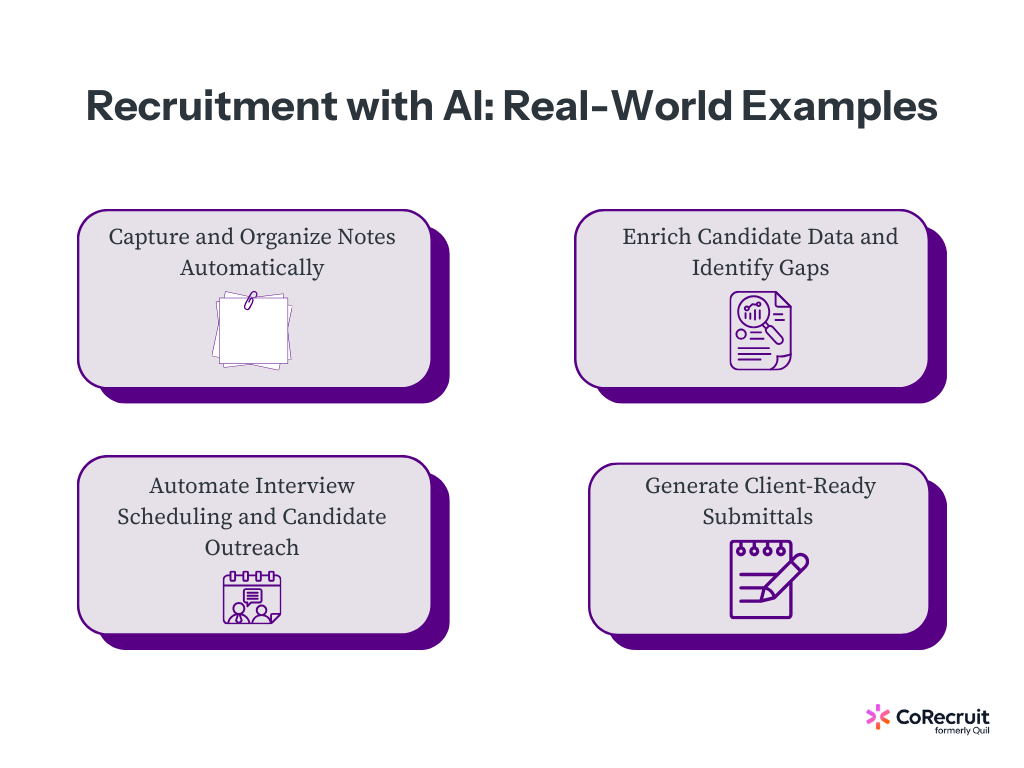
And that’s exactly where AI helps by scaling processes like:
The result is recruiters spending their time on high-leverage tasks that drive placements and revenue.
Scaling often tempts agencies to chase new business at the expense of existing clients. That is usually the wrong trade-off. Retainer and repeat clients are the backbone of sustainable agency growth.
They come with lower acquisition costs, higher margins, and a steady referral pipeline.
A few approaches that work well for recruiting agencies:
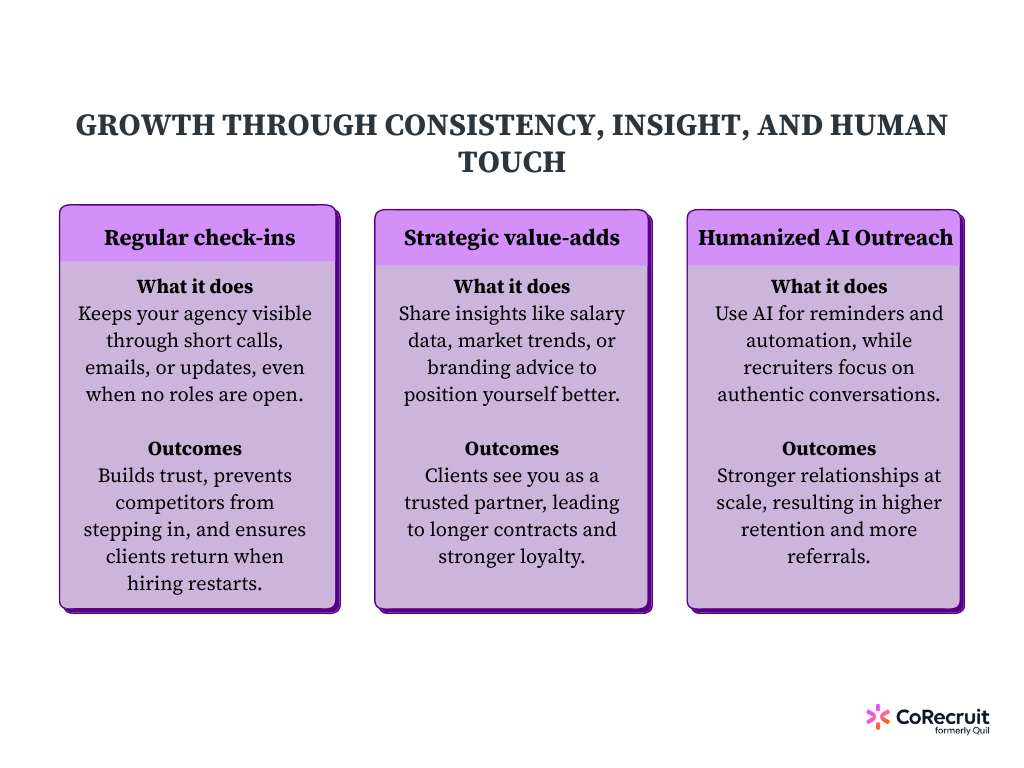
This way, you can expect (and see) higher repeat business, lower churn, and more referral opportunities, all without adding extra recruiters.
Your recruiters are the core of your agency’s success.
When they’re engaged, the impact is huge, a fact that’s proven with numbers.
Companies with highly engaged employees see 21% higher profitability, 17% higher productivity, and 59% lower turnover.
So, how do you build that kind of team?
A team that works faster, delivers better candidate experiences, and sticks around longer contributes to growth with minimal turnover 🙂.
While many agencies focus on attracting new candidates, a significant opportunity lies in nurturing and retaining existing talent pools.
Traditional ATS platforms excel at tracking candidate data but can’t help build and retain candidate (or client) relationships. relationships.
By integrating AI-powered tools, agencies can give a much-needed boost to candidate engagement.
This helps with two things:
It also tailors interactions to candidate preferences, creating a better experience. Plus, AI identifies passive candidates and engages them proactively, keeping your agency top-of-mind.
And the benefits are inherent 🙂
Agencies that invest in AI-driven candidate engagement not only improve retention rates but also build a community of brand advocates.
These engaged candidates are more likely to refer peers, share job postings, and contribute to a positive agency reputation.
Recruiting teams face gaps that slow them down, and new “scalable” solutions, like one-way video interviews, gamified assessments, asynchronous tests, and chatbots, flood the market to address these challenges.
These tools sound like the future.
But in practice? They often create problems like:
These tools are designed to automate specific tasks.
But they don’t tackle the real blocker in agency recruiting: capturing and transforming information at scale.
That’s where AI note-taking is different.
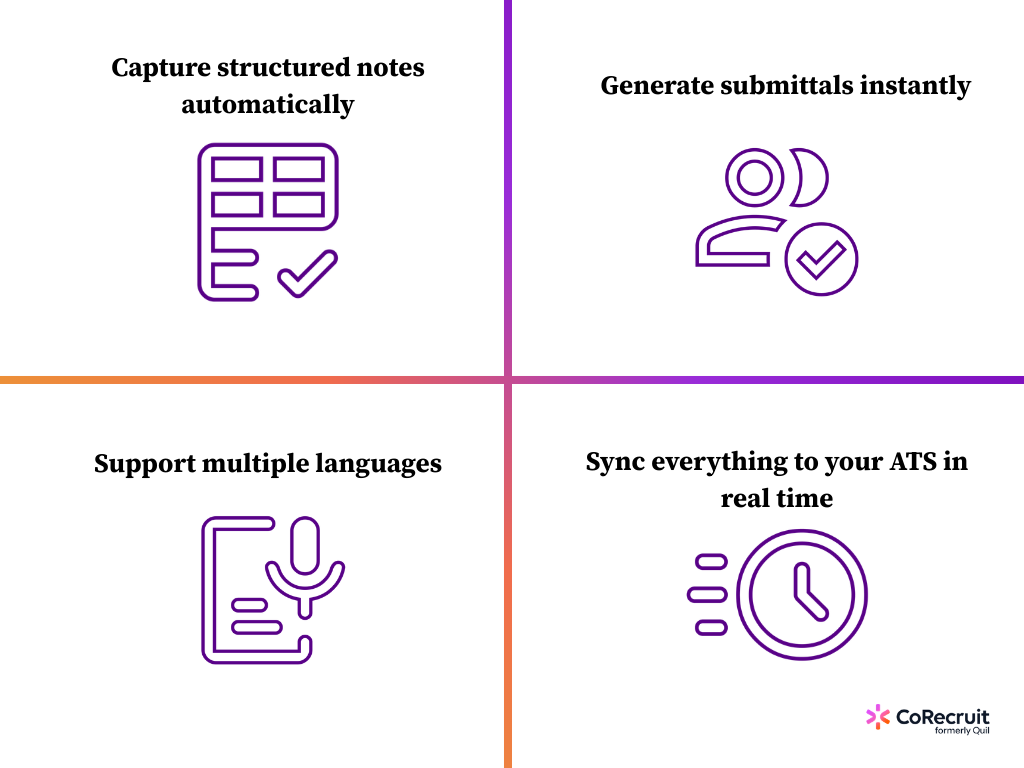
Together, ATS + AI create the kind of scale that no single tool can deliver.
Recruiters get time back, clients get faster service, and agencies grow without burning out their teams.
Think of it as giving your ATS a brain. The infrastructure stays the same, but now it can capture, think, and create like a recruiter’s digital assistant.
With a tool like CoRecruit, you can:
If you already have a solid foundation laid out with a good ATS platform, it’s time to shift gears and focus on replacing hours of manual work with automation.
.svg)


%20LG.svg)

.svg)


