
AI in Recruiting

Minahil Mansoor

Last updated:
June 2026
Read time:
12
mins
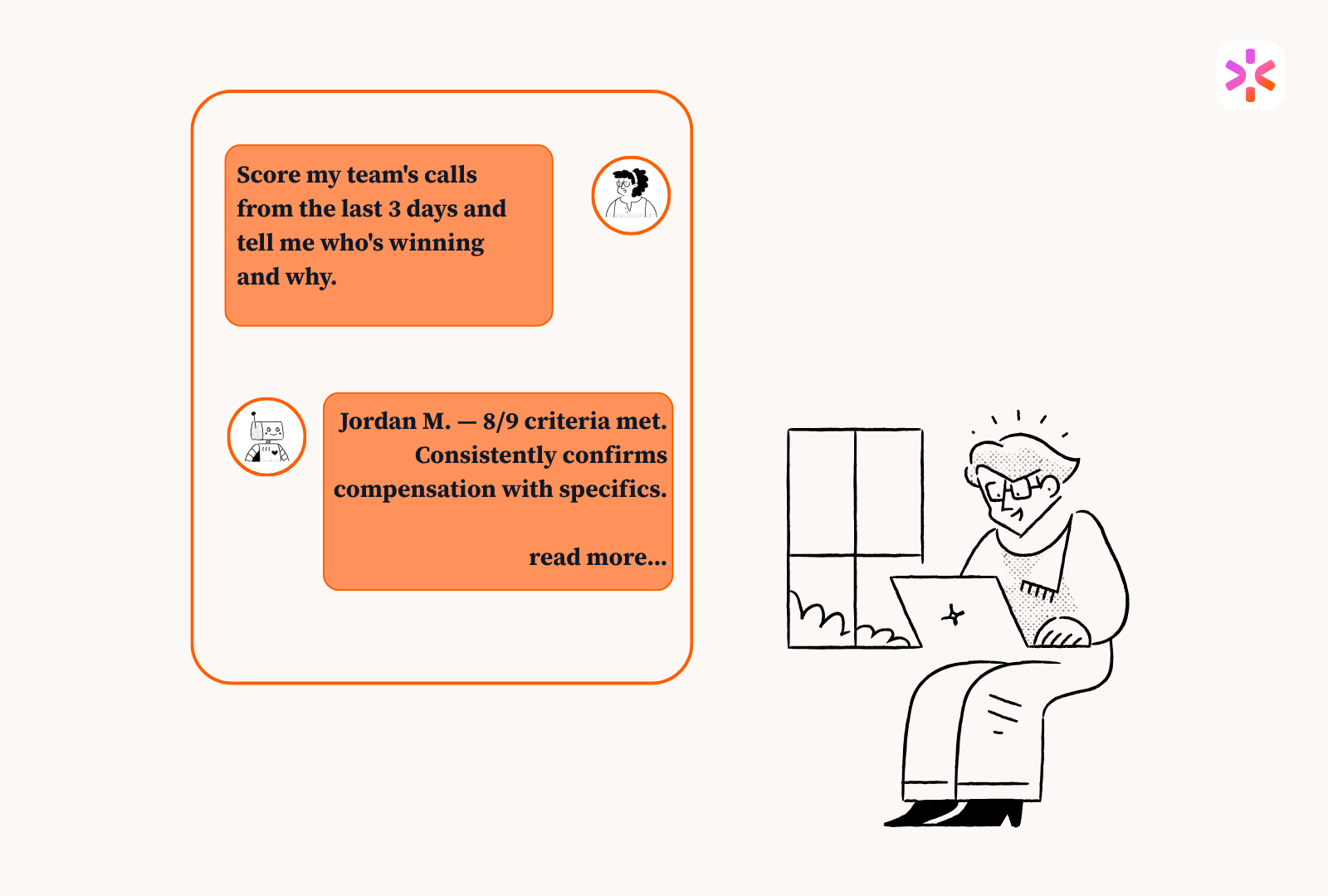
Every recruiting team has that one consultant doing 30% of the billings. Most managers know who it is. Very few can tell you why.
At least not with evidence. It's usually a gut feeling, "she's just better on the phone", which is a completely useless coaching insight for the other seven people on the team.
That's the real problem with call coaching in recruiting. It's not that managers don't want to do it. It's the traditional process: block a Friday, pull one call per person, watch at 3x speed, try to remember what you were looking for, repeat next week, which eats eight hours and produces a hunch.
And when you're running a boutique search firm or a staffing agency, you don't have eight hours to spend producing hunches.
AI call coaching changes the math entirely. Here's how recruiting teams are running it in 2026.
AI call coaching for recruiters is the use of AI software to automatically review call recordings, score them against a defined rubric, surface coaching opportunities, and track performance over time — without a manager manually watching recordings.
The AI reviews every call the team has, not just the sample a manager has time to pull. It applies the same scorecard consistently, flags where each recruiter is strong or weak, and pulls verbatim quotes from transcripts to back it up. The manager still coaches. The AI just makes sure there's always something specific to coach on, and that the progress — or lack of it — is visible week over week.
Coaching is universally acknowledged as one of the highest-leverage things a recruiting team leader can do. It's also the first thing that gets dropped when the week gets busy.
The math is simple and brutal. Eight recruiters. One call each to review. An hour per call at 3x speed plus notes. That's a full working day, every week, just to identify what to work on. Following up to check if it actually changed is a separate problem.
Most managers start with good intentions and peter out within a month. The process isn't sustainable, so it doesn't get sustained. Recruiters miss out on the feedback loop that would actually make them better. The top biller stays at the top. The gap between them and everyone else stays exactly where it is.
AI call coaching works by connecting a recruiter's call transcripts to an AI model that evaluates each call against a predefined scorecard, returns scores per criterion, highlights coaching moments with direct quotes, and tracks changes in performance over time.
In practice, it looks like this:
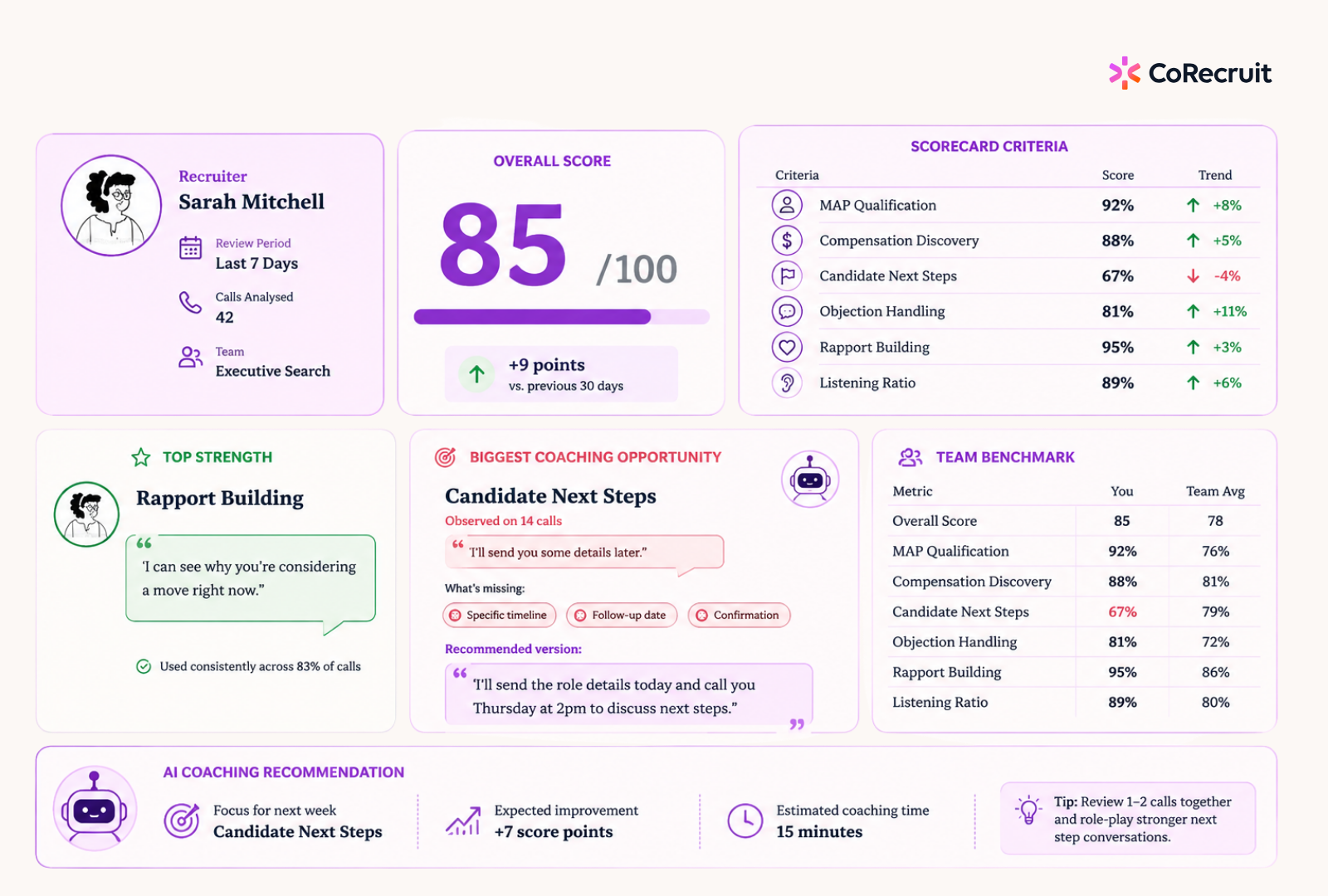
This is the only part that requires real thinking. A recruiting call coaching scorecard typically covers criteria like:
Each criterion needs a definition of strong, partial, and poor performance. Ideally it includes example talk tracks.
Building this with AI takes about 20 minutes. Feed in an existing rubric or describe the call type, answer a few clarifying questions, and the model generates a structured prompt ready to paste into system instructions.
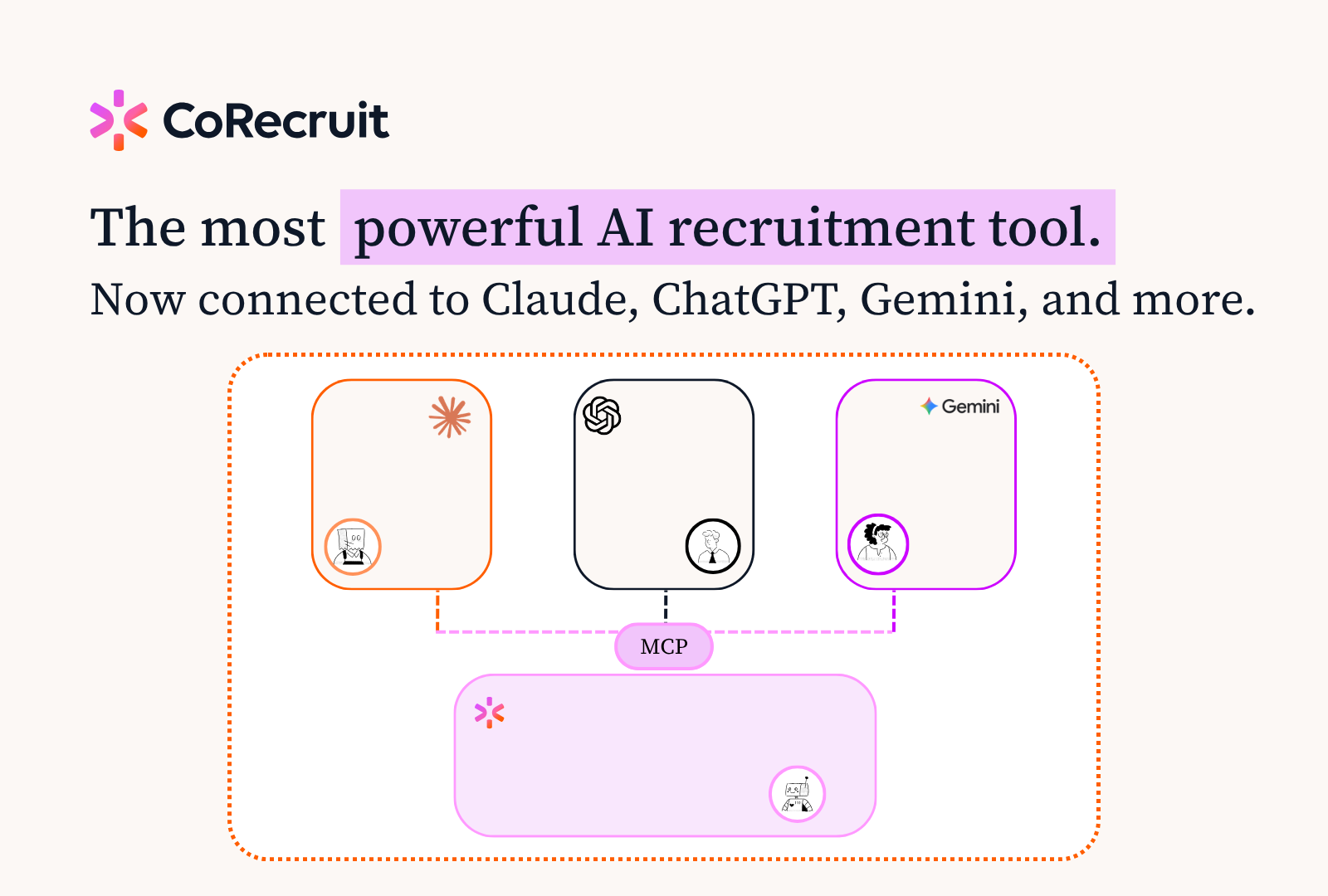
This is where CoRecruit's MCP connector comes in.
MCP stands for Model Context Protocol. It's a standardized way for AI models to communicate with external software; think of it as an API specifically designed for AI tasks. Before MCP, connecting a data source to an AI tool meant manual exports, copy-pasting, or bespoke integrations that constantly broke. MCP creates a live, structured channel between the data source and the AI.
CoRecruit captures transcripts and call notes automatically across phone, video, and in-person meetings. The MCP connector makes all of that live data queryable by whatever LLM the team uses: Claude, ChatGPT, Gemini. The AI is always working from current data.
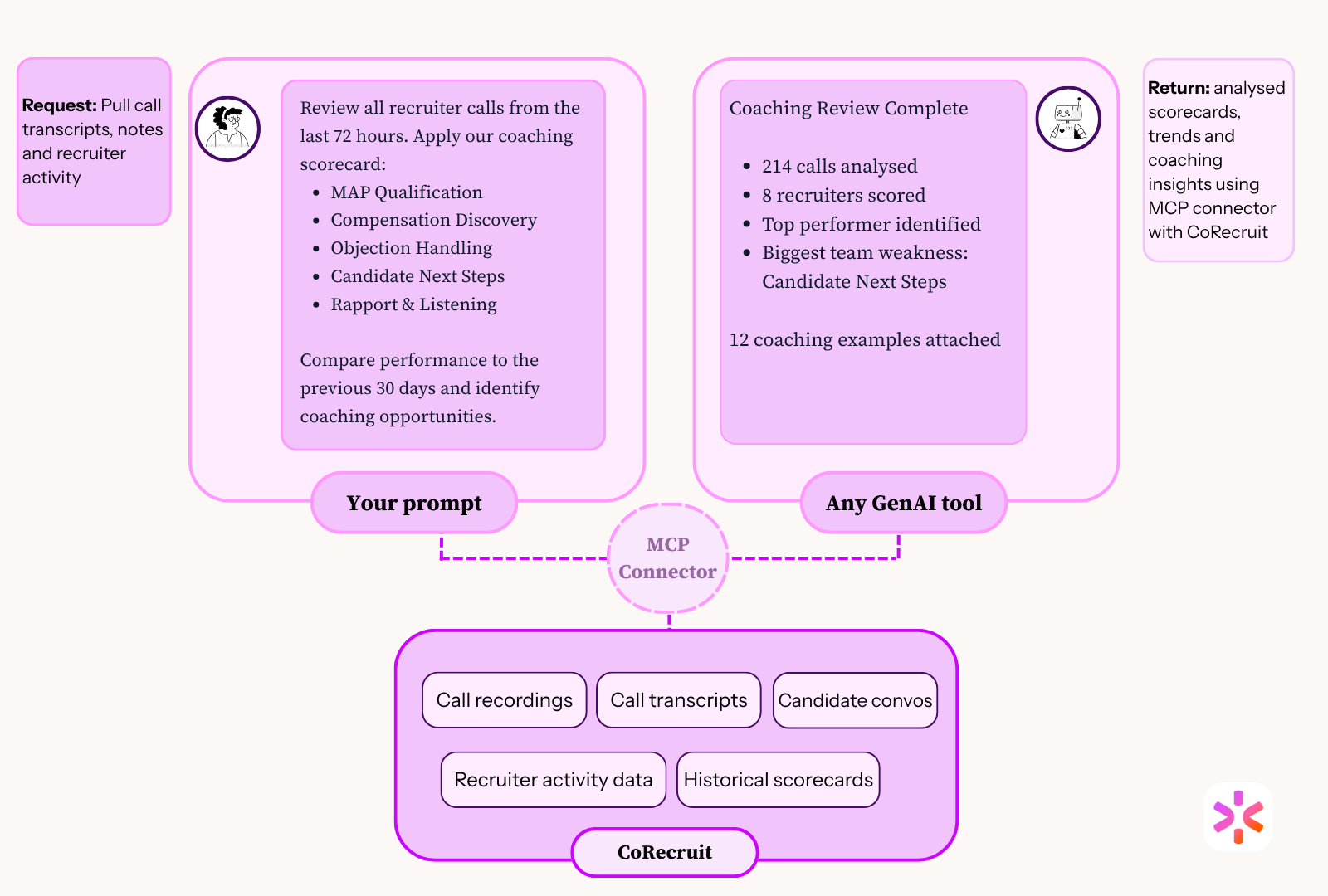
Once the scorecard is in the system instructions and the MCP connector is active, a full team coaching review is one prompt:
"Give me a scorecard for every interview call from the last 3 days. Run a 30-day baseline. Show week-over-week progress. Pull exact quotes for top performances and gap areas."
Two minutes later: scores for the whole team, trend lines, and verbatim quotes to use in coaching conversations. The setup takes under an hour. After that, running it takes thirty seconds.
Getting the output is the easy part. Using it well is where most teams either win or waste the investment.
The scorecard will surface multiple gaps. Resist the urge to fix all of them. One focused coaching point per week, tracked consistently, produces real change. Five coaching points produce none.
Abstract feedback like "you need to qualify compensation better" doesn’t help people. A verbatim line from their own call, followed by what a stronger version sounds like tips them in the right direction.
Every agency has one person carrying a disproportionate share of the billings. Once call coaching is running, it becomes possible to see exactly which scorecard criteria they hit consistently that others miss. That's the coaching curriculum.
It's also a useful filter on the scorecard itself, if the top biller routinely skips a criterion and still closes, that criterion might not belong on the scorecard.
Coaching without measurement is just conversation. Week-over-week trend data makes the progress visible, which keeps both managers and recruiters accountable. When the score moves, everyone sees it.
The benefits of AI call coaching software for recruiters are:
No. AI call coaching does not replace recruiting managers; it removes the bottleneck that stops coaching from happening at all.
The parts of coaching that require a human are still entirely human: the conversation, the role-play, the ride-along, the relationship. What the AI removes is the tax. This includes the hours of manual review that made consistent coaching unsustainable for anyone managing more than three or four people.
A manager who previously reviewed eight calls in eight hours can now review eighty in twenty minutes. The time freed up goes back into the conversations that produce actual behavior change.
CoRecruit's MCP connector works with Claude, ChatGPT, Gemini, and other major LLMs. The full setup (scorecard build, MCP connection, first coaching run) takes under an hour. Teams that have deployed it are reporting a 50% improvement in scorecard adherence within the first few weeks.
Try CoRecruit free for 7 days at corecruit.com.
.svg)


%20LG.svg)

.svg)


