
Comparisons & Lists

Minahil Mansoor
Last updated:
June 2026
Read time:
7
mins
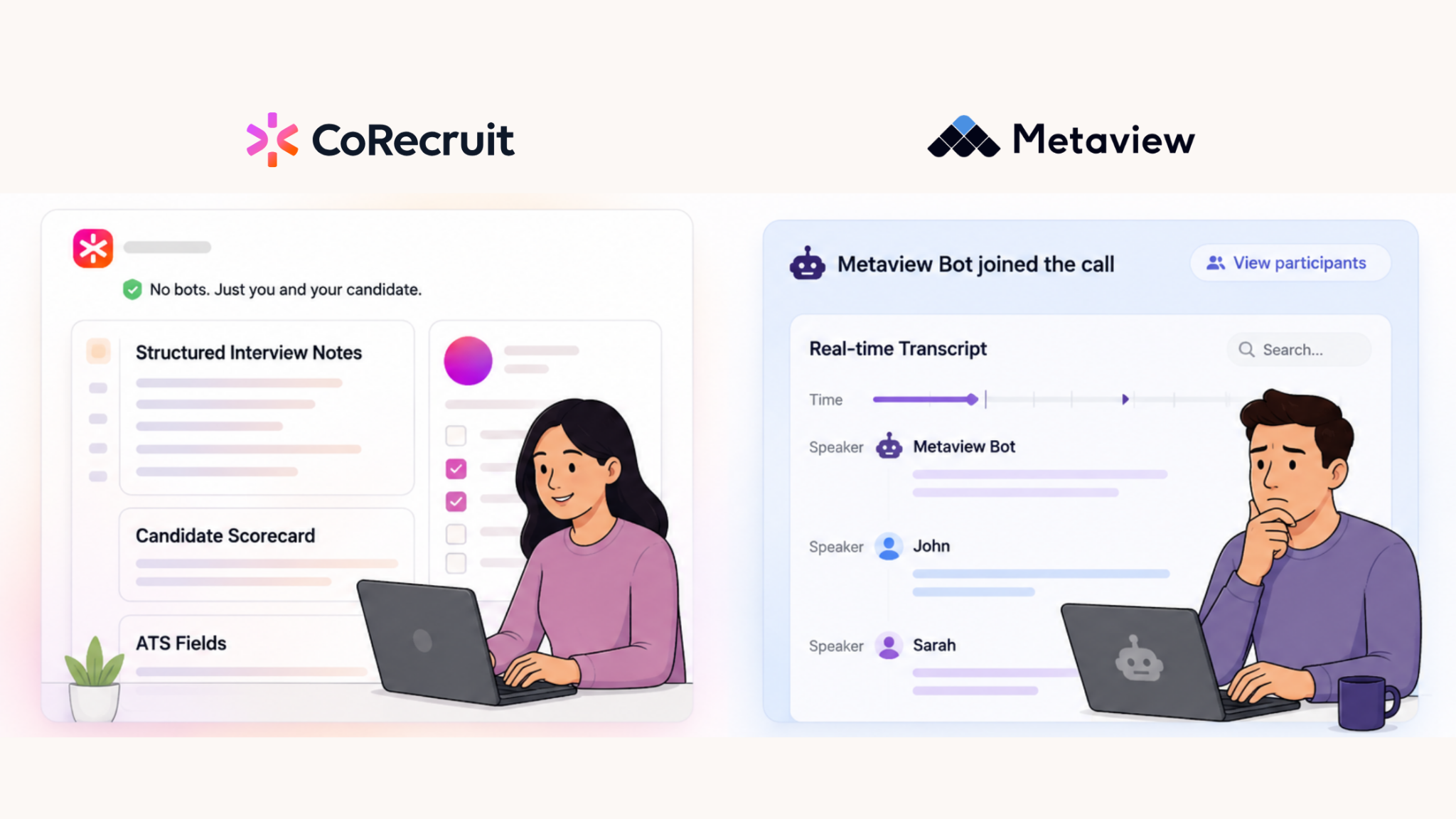
A candidate is mid-sentence, opening up about why they're looking to leave, the kind of detail that doesn’t normally show up in formal interviews. That’s when they notice the bot in the call: “This call is being recorded,” with an unknown icon displayed on their screen.
Now, the candidate is more careful.
This is the practical problem with bot-based AI notetakers in recruiting. Candidates aren't in a corporate interview loop. They're having what feels like a private conversation with a recruiter they just met. A bot joining that call as a named participant signals surveillance, not support, and it shows in the quality of what candidates are willing to say.
The recording method shapes everything that follows because of what candidates say, how natural the conversation feels, and what the AI can work with.
CoRecruit captures calls at the device level, no virtual participant joins the meeting. It works across Zoom, Microsoft Teams, Google Meet, mobile calls, WhatsApp, and desktop VoIP. From the candidate's perspective, there's nothing to notice.
Once the call ends, CoRecruit's AI processes the transcript and generates structured output: pre-screens, interview scorecards, candidate submittals, and ATS updates — all without a bot ever appearing in the participant list.
Metaview's AI notetaker works by sending a bot into the call as a participant. The bot joins Google Meet, Zoom, or Microsoft Teams calls and records the audio stream in real time. On most platforms, other participants can see it.
Metaview does offer some flexibility around this:
The workaround exists, but it adds steps. The recruiter has to remember to record locally, then upload the file, then wait for processing. For a team running 20+ calls a day, that friction adds up.
Most bot-based tools were built for structured corporate interviews: scheduled, formal, both parties expecting to be on the record. That context is different enough from agency recruiting that the distinction rarely comes up in product design.
Agency recruiters work differently. Sourcing calls happen fast and often cold. Candidates haven't agreed to a recorded interview, they picked up the phone. A bot joining that call and announcing itself creates a dynamic that works against the recruiter: candidates get guarded, conversations get shorter, and the best signal gets filtered out before it reaches the notes.
For a full feature and pricing comparison of CoRecruit and Metaview, see CoRecruit vs Metaview: Full Comparison.
When a bot joins a call, candidates know they're being recorded and processed by a third-party system. Some are fine with it, but many aren't, particularly passive candidates who are already cautious about discretion. The most valuable conversations in recruiting tend to happen when the environment feels private.
Botless recording keeps that environment intact. The recruiter is present, the conversation flows naturally, and the AI does its work invisibly.
Bot-based recording is well-suited to structured, scheduled interviews where both parties know the call is being documented. Corporate hiring managers interviewing shortlisted candidates, panel interviews, or formal screening calls on video platforms; these are contexts where a bot's presence is expected and unremarkable.
For those use cases, the post-call upload workaround isn't necessary because the bot model fits the format. Metaview's summary quality and ease of use in that context are strong.
.svg)


%20LG.svg)

.svg)


