
Comparisons & Lists

Josh Kirkham
Last updated:
June 2026
Read time:
13
mins
Mobile recruiting has become a core part of how agency recruiters operate. Interviews happen in client offices, candidates are screened between back-to-back calls, and notes get scribbled on whatever's nearby. The desktop is no longer where most of the work starts from.
The problem is that most recruiting platforms still treat mobile as an afterthought. Their apps let recruiters view a record, check a name, and maybe add a note. But meaningful progress still requires a laptop. For agencies running high volumes across multiple clients, that doesn’t help with placements happening over the phone.
The best mobile recruiting software in 2026 is built for how agency recruiters actually work: phone-first, fast-moving, and allergic to unnecessary admin. Each tool on this list takes a different approach, from full AI-powered recruiting platforms to traditional ATS systems with mobile access. Here's how they stack up.
Note: features and reviews for the tools are updated as of June 2026.
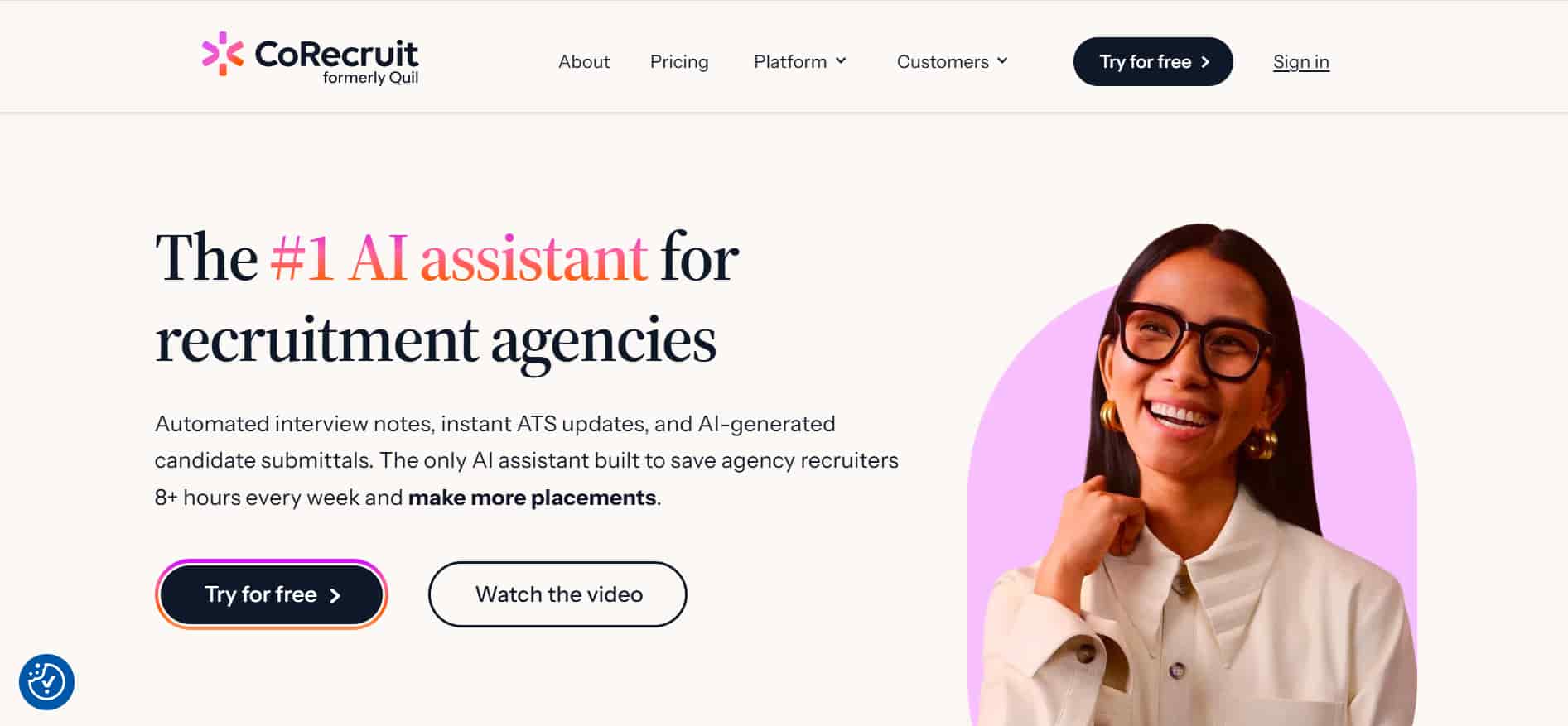
CoRecruit is an AI-powered recruiting platform built specifically for third-party staffing agencies, and it's the strongest mobile recruiting software on this list for one reason: 91% of recruiter conversations happen over the phone. CoRecruit is built around that reality.
The platform records phone calls directly without bots, without clunky integrations, and without asking candidates to join a video link. Calls are transcribed automatically, and those transcripts sync into the ATS alongside structured notes, follow-up tasks, and candidate updates. Recruiters walk out of a call with their pipeline already updated.
CoRecruit integrates with major VoIP providers so recruiters can work within their existing phone setup. It also connects with leading ATS platforms, meaning agencies don't have to rip out their current stack to get AI-powered call intelligence.
Key features of CoRecruit:
Pros: Built specifically for third-party agencies, removes phone call admin without disrupting existing tools, no bots on calls
Cons: Not an end-to-end ATS replacement; best value when used alongside an existing ATS
Pricing: Contact CoRecruit for pricing
G2 rating: 4.7/5
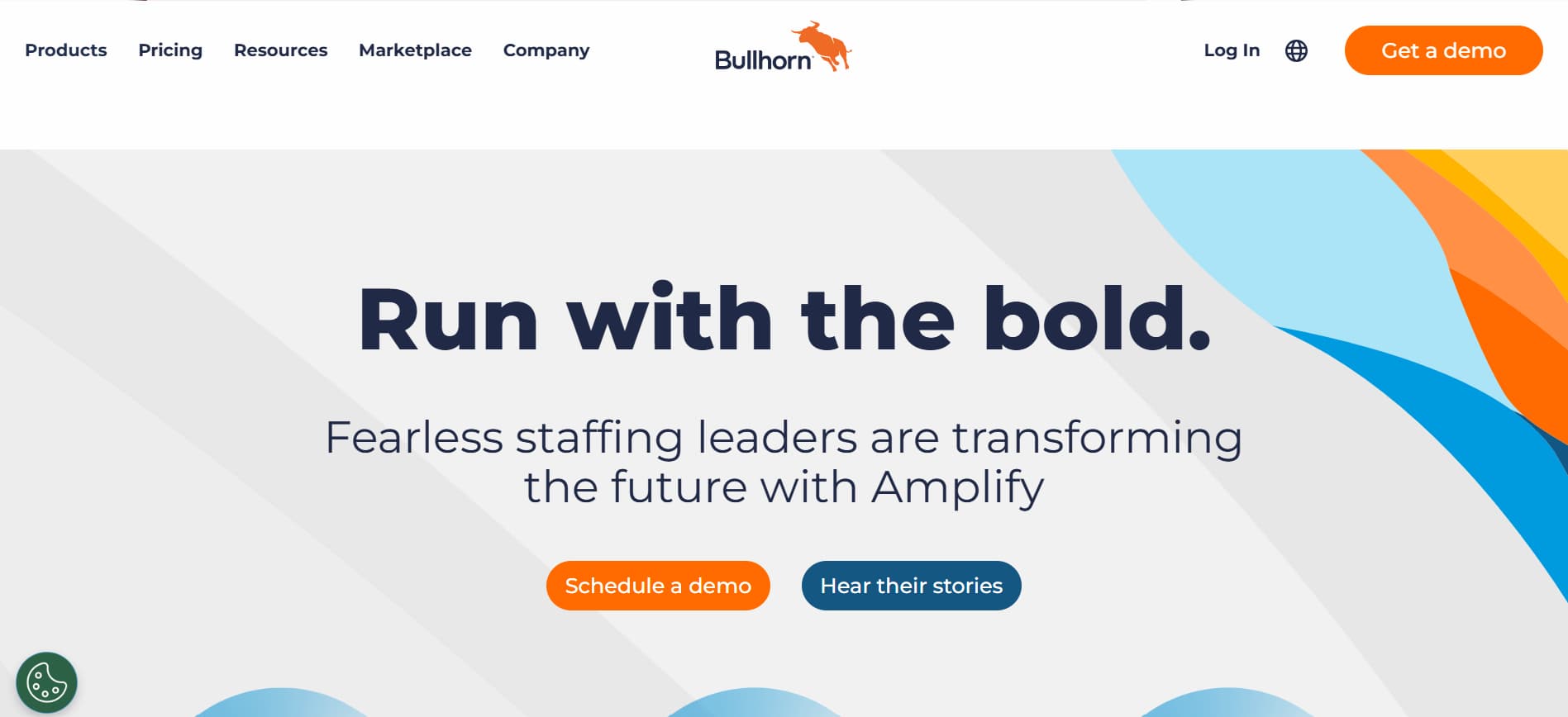
Bullhorn is one of the most widely used recruiting CRMs among staffing agencies. It handles end-to-end workflow management, candidate sourcing, client relationship tracking, job orders, and reporting, within a single platform designed for complex, multi-role environments.
The Bullhorn mobile app gives recruiters access to candidate and client records when they are away from their desks. Recruiters can review notes, check contact history, and prepare for upcoming conversations from their phone. For agencies already embedded in the Bullhorn ecosystem, this keeps information accessible throughout the day.
Where Bullhorn's mobile experience falls short is in live capture. The app is built for access and preparation, not for recording or transcribing what happens during a call or meeting. Post-conversation admin still defaults to manual entry, which adds up quickly in high-volume agencies.
Key features of Bullhorn:
Pros: Strong fit for complex agency workflows across multiple teams and offices
Cons: Steep learning curve, mobile app focused on access rather than live workflow support
Pricing: Contact vendor for pricing; no free plan or trial
G2 rating: 4.2/5 (based on verified user reviews)
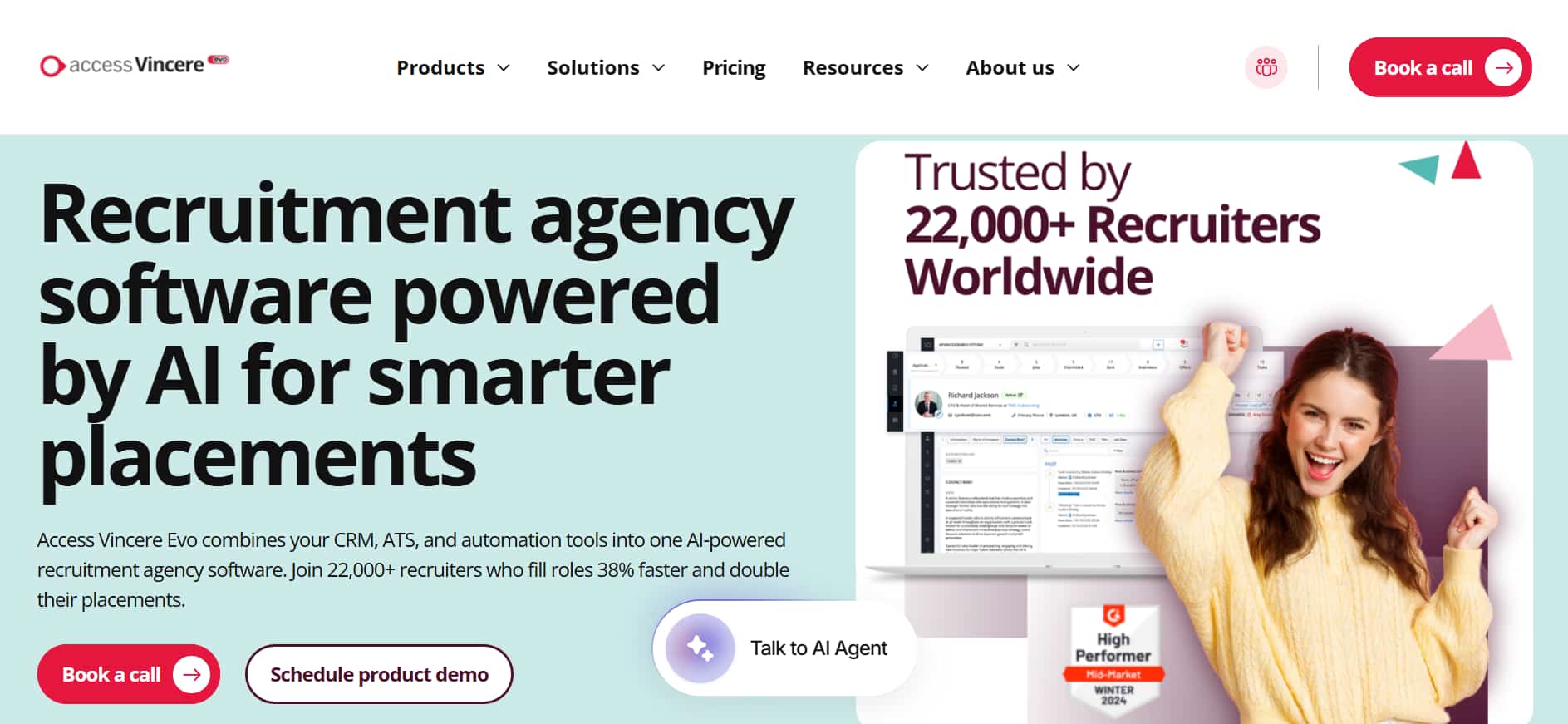
Vincere is a front-to-back office recruitment platform that combines applicant tracking, CRM, time management, and invoicing in one system. It's a strong fit for larger agencies managing contract staffing, payroll, or multi-branch operations where recruitment and back-office functions need to stay connected.
The mobile app covers record access, notifications, and messaging. Recruiters can stay informed and responsive throughout the day without switching to a laptop for basic tasks. For agencies that rely heavily on Vincere's back-office capabilities, the app extends that visibility to mobile.
Like most platforms on this list, Vincere's mobile experience is designed around access rather than automation. In-person interview recording and automated transcript syncing aren't part of the app, which limits how much post-meeting admin it can remove.
Key features of Vincere:
Pros: Combined recruitment and back-office tools in one platform, suited to large agencies
Cons: Can feel heavy for smaller teams, limited mobile automation
Pricing: Contact vendor for pricing; no free plan or trial
G2 rating: 4.5/5 (based on verified user reviews)

JobAdder is a cloud-based ATS and recruiting CRM with a clean interface and a well-structured workflow. It centralizes candidate management, client activity, job postings, and deal tracking, making it a popular choice for agencies that want a familiar recruiting setup without a heavy system.
The mobile app lets recruiters check tasks, review candidates, and stay updated between meetings. It's genuinely useful for reference and quick lookups, though it stops short of supporting deeper mobile workflows. Automated call recording, transcript syncing, and real-time pipeline updates aren't available on mobile, so follow-up admin still sits with the recruiter.
Key features of JobAdder:
Pros: Clean interface, combined ATS and CRM functionality
Cons: Limited automation, AI features are add-ons rather than core
Pricing: Contact vendor for pricing; no free trial
G2 rating: 4.4/5 (based on verified user reviews)
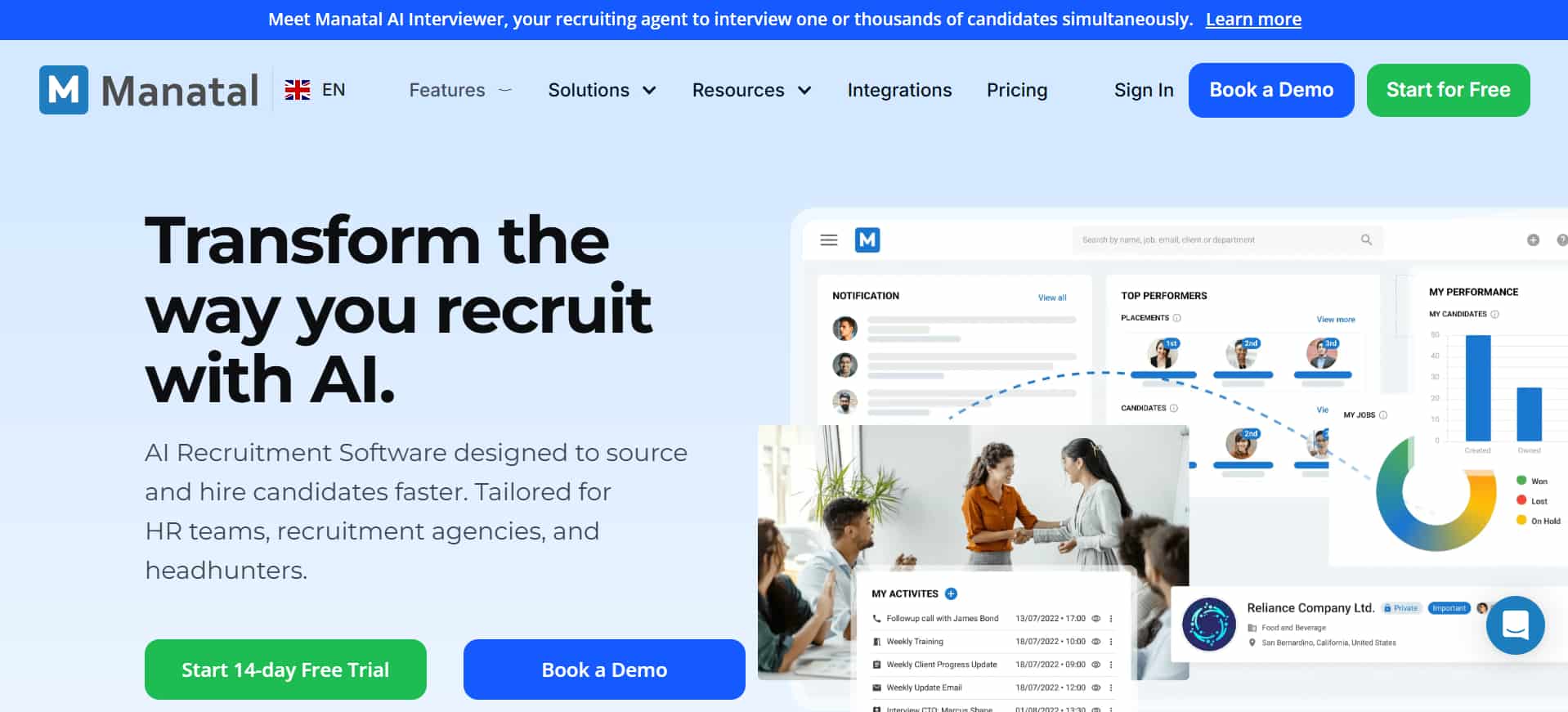
Manatal is a cloud-based ATS and recruiting CRM designed for agencies that want a straightforward, all-in-one solution. It covers candidate tracking, client relationship management, and pipeline oversight in a user-friendly interface, with tools for resume parsing, client portals, and custom workflows.
The mobile experience is browser-based. There's no dedicated app, which limits how much recruiters can do on the go compared to platforms with native mobile support. Basic visibility is available, but actions that require more workflow depth still rely on desktop access.
For agencies prioritizing ease of adoption and a clean ATS experience, Manatal works well on desktop. As a mobile-first tool, it's less competitive.
Key features of Manatal:
Pros: Quick to adopt, user-friendly interface
Cons: No dedicated mobile app, not suited to mobile-first workflows
Pricing: Free trial available; plans start at $15 per user/month
G2 rating: 4.8/5 (based on verified user reviews)
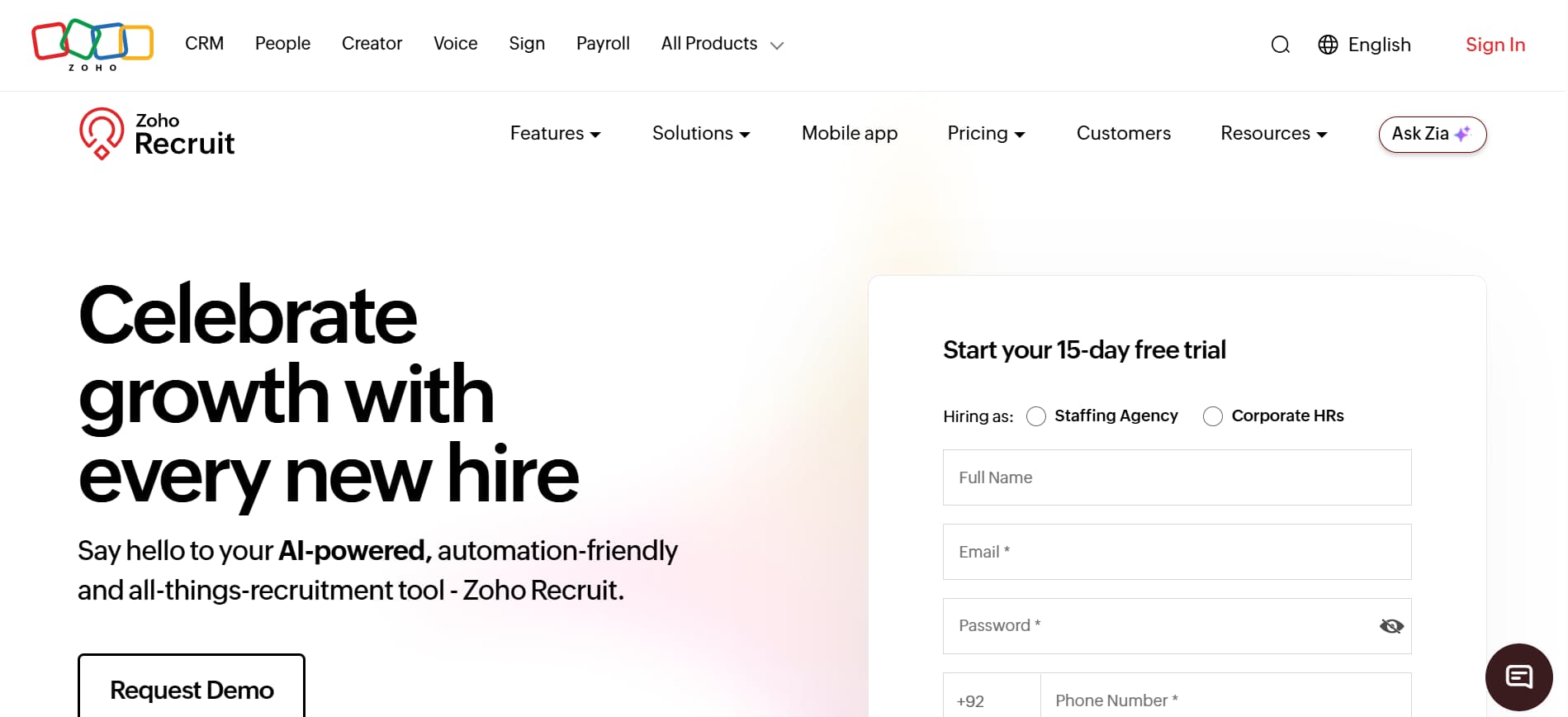
Zoho Recruit is a cloud-based ATS used by both staffing agencies and in-house teams. It offers core recruitment functionality, including candidate tracking, job management, resume parsing, and reporting. Agencies already using other Zoho products will find the integration convenient.
The mobile app supports task management, record updates, and manual note-taking. It's useful for staying organized between meetings, though it doesn't offer automated call recording or transcript generation. Notes are still a manual exercise, which limits its ability to reduce admin for phone-heavy recruiters.
Key features of Zoho Recruit:
Pros: Part of the wider Zoho product suite
Cons: Mobile features are basic; automation is rule-based rather than AI-driven
Pricing: Free plan available; paid plans start at $25 per user/month
G2 rating: 4.4/5 (based on verified user reviews)
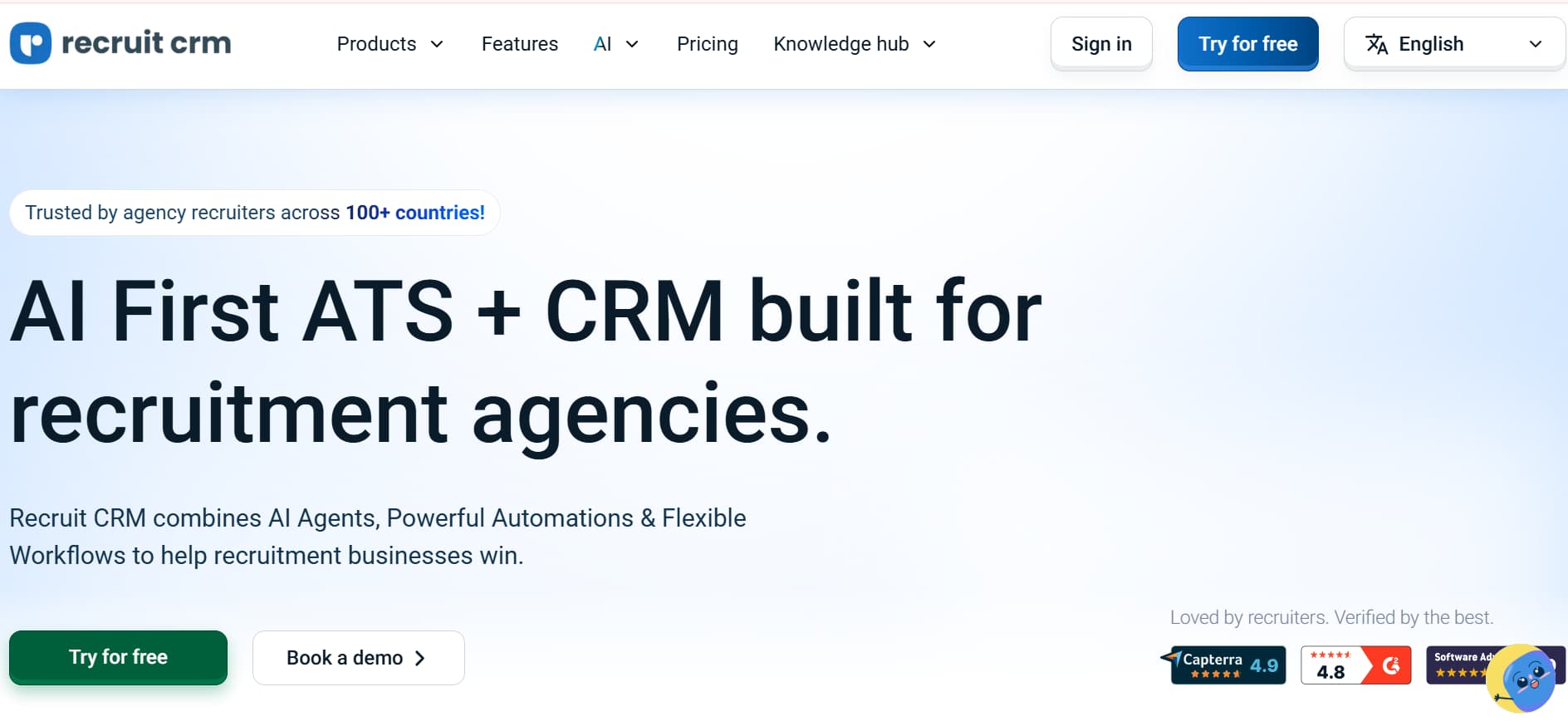
RecruitCRM is an ATS and recruiting CRM built for staffing agencies that want clear visual pipelines and predictable workflows. The platform is designed for quick adoption, with resume parsing, email sequences, and task management keeping day-to-day recruitment organized.
The mobile app allows recruiters to review candidate information, client notes, and job details on the go, and it supports call recording from the app. These recordings are not natively transcribed or automatically synced into the broader ATS, though, so the post-call admin reduction is limited compared to tools like CoRecruit.
Key features of RecruitCRM:
Pros: Simple interface, visual pipelines
Cons: Call recordings aren't transcribed or synced automatically; limited automation compared to AI-first platforms
Pricing: Free trial available; plans start at $40 per user/month
G2 rating: 4.8/5 (based on verified user reviews)
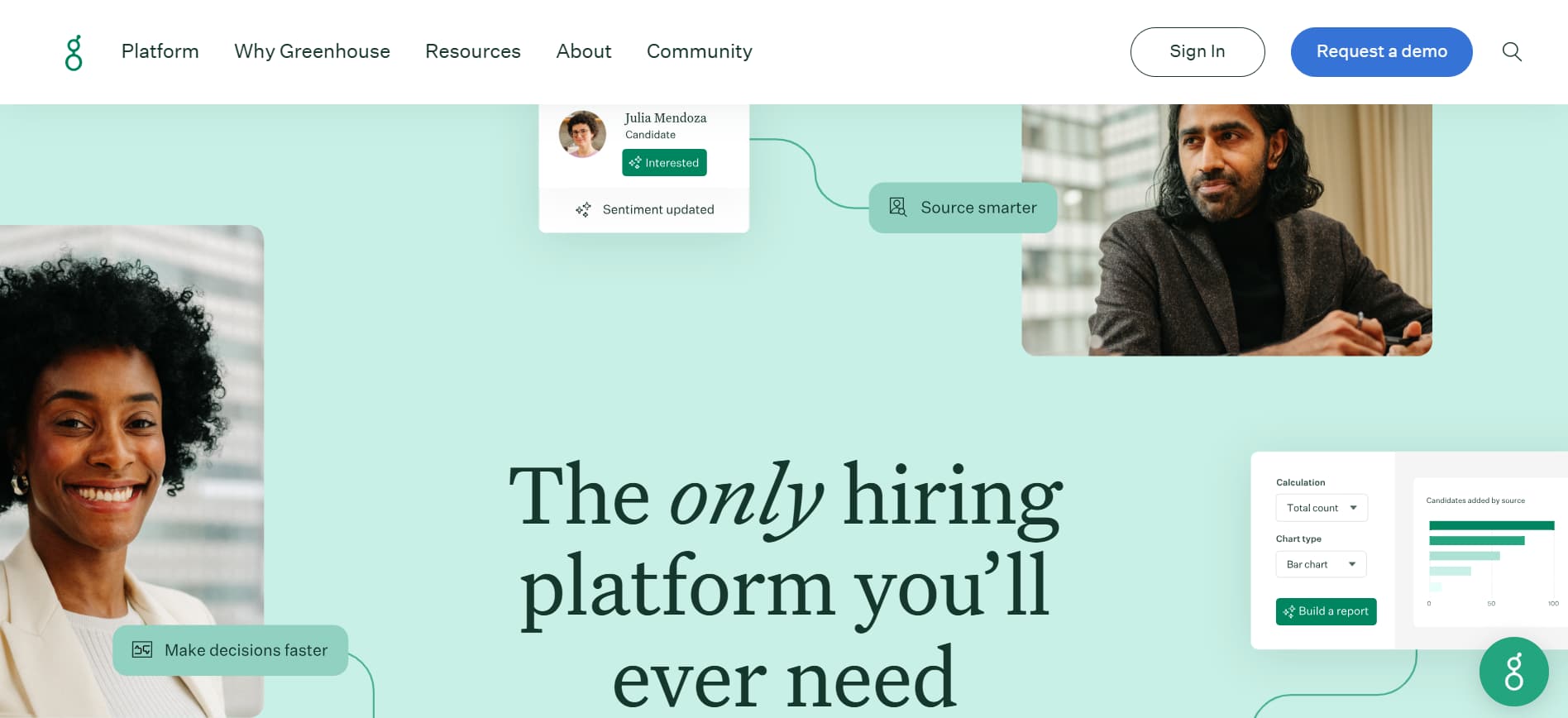
Greenhouse is a well-established ATS used by agencies and in-house teams that want a structured, data-driven approach to hiring. The platform includes AI-assisted features such as resume screening, interview question generation, and scheduling automation, all sitting within a traditional ATS framework.
The mobile app supports interview preparation, recruiters can review candidate information, access notes, and complete scorecards from their phone. It's a solid companion for structured, process-oriented agencies where evaluation consistency is a priority.
Live capture and automated transcript syncing aren't available, which keeps post-meeting admin manual. For agencies running high call volumes, that's a meaningful gap.
Key features of Greenhouse:
Pros: Strong reporting, deep integration support
Cons: AI features are bolt-ons to an existing ATS; process-heavy for agencies trying to reduce admin
Pricing: Contact vendor; no free plan or trial
G2 rating: 4.4/5 (based on verified user reviews)
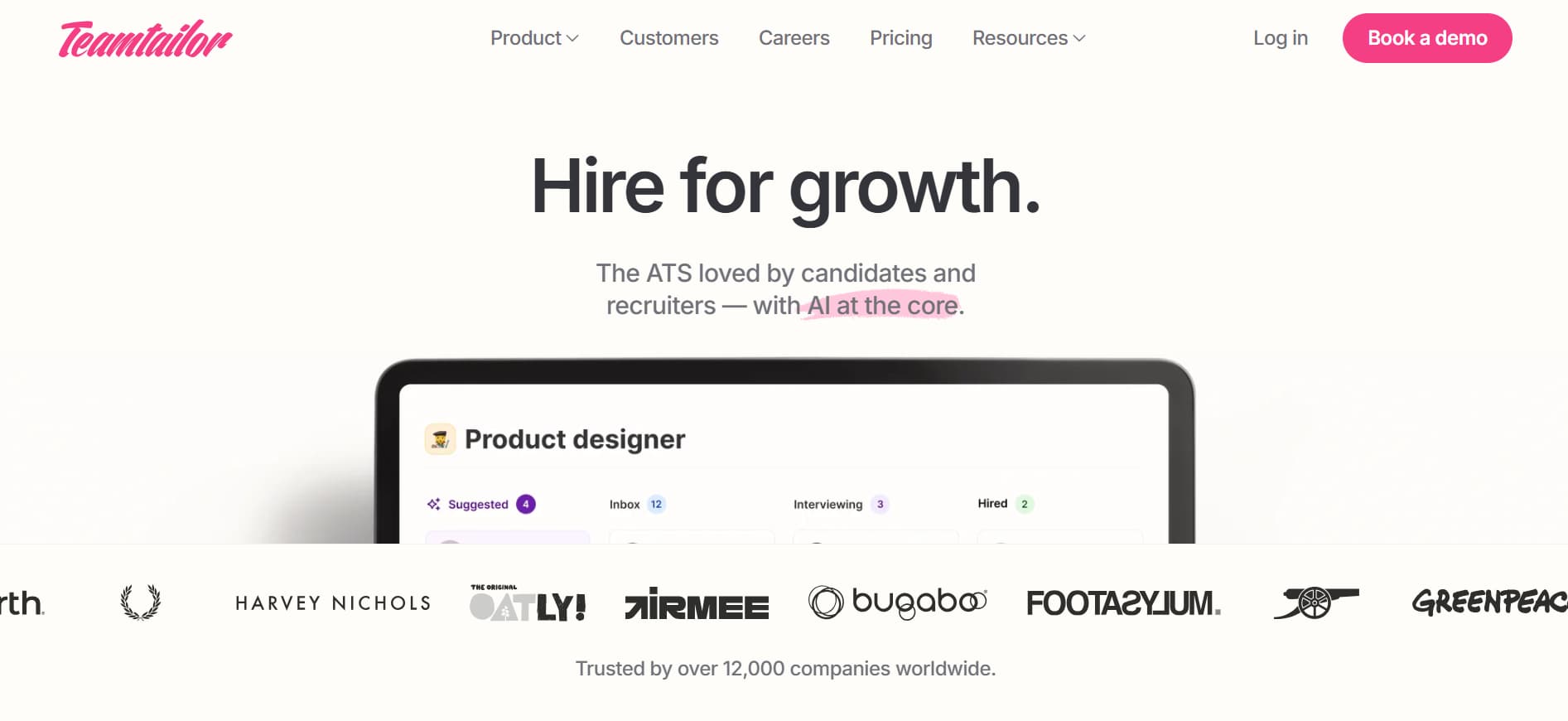
Teamtailor is a cloud-based ATS built primarily for in-house hiring teams, with an emphasis on candidate experience and employer branding. Some agencies use it for pipeline management and job posting, particularly those with a strong focus on candidate communication.
The mobile app covers profile access, job tracking, and messaging. It's clean and responsive, though the feature set leans toward internal hiring workflows rather than the fast-paced, multi-client demands of agency recruiting. Live interview capture isn't supported.
Key features of Teamtailor:
Pros: Clean interface, built-in candidate communication tools
Cons: Feature set designed for in-house hiring; limited value for agency workflows
Pricing: Free trial available; contact vendor for pricing
G2 rating: 4.6/5 (based on verified user reviews)
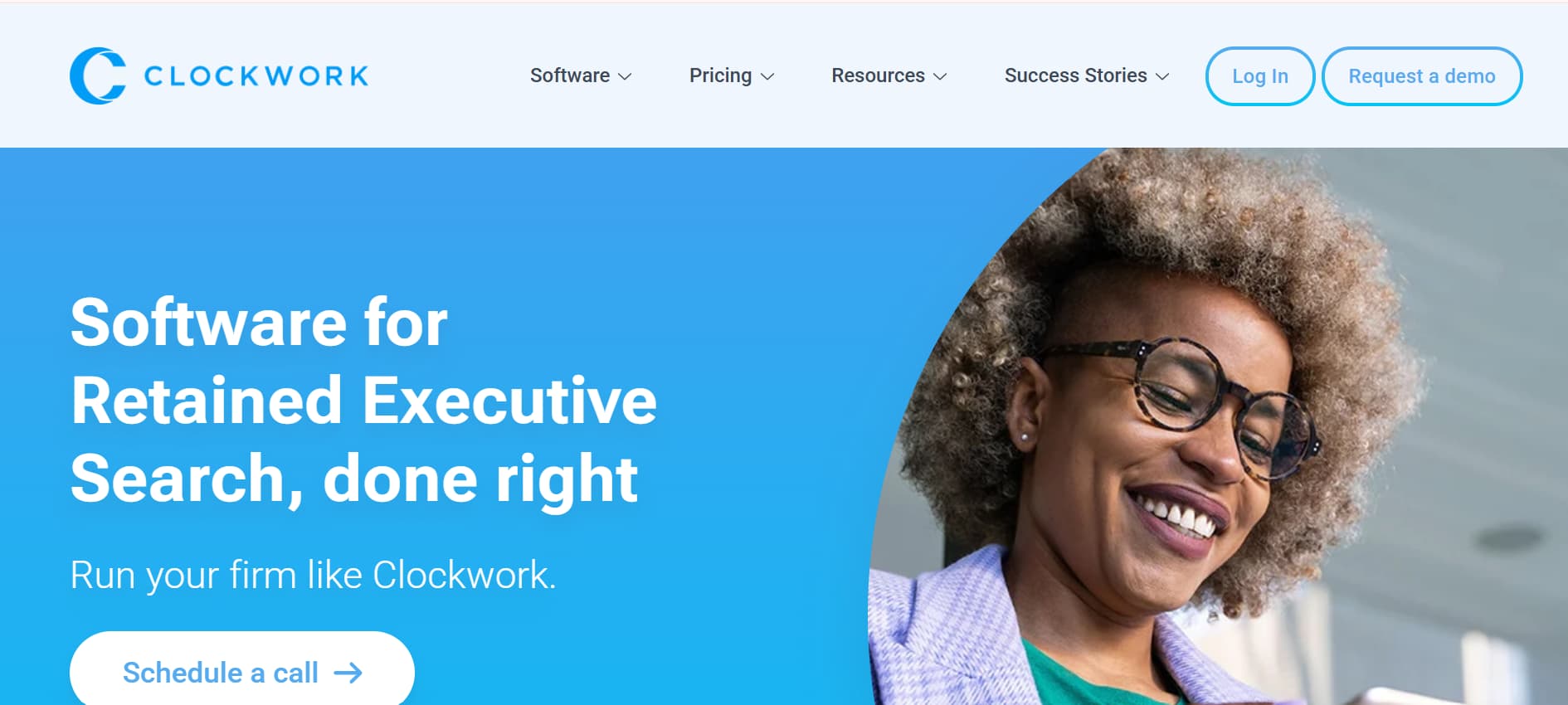
Clockwork is an ATS built for agencies that want structure and visibility across their recruitment workflows. Its mobile app lets recruiters search their candidate database and access project information while away from their desk, useful for quick reference during a busy day.
The platform is better suited to compliance-focused agencies with established processes than to teams looking to reduce admin through mobile-first automation. Core workflow actions still rely on desktop use, and AI-driven task reduction isn't a primary feature.
Key features of Clockwork Recruiting:
Pros: Solid customization and reporting tools for compliance-focused agencies
Cons: Steep learning curve, not suited to admin-free mobile recruiting
Pricing: No free trial; plans start at $149 per user/month
G2 rating: 3.6/5 (based on verified user reviews)
Mobile recruiting software is a specialized category of Human Resources (HR) technology designed to facilitate the end-to-end talent acquisition process through mobile devices, such as smartphones and tablets. Unlike traditional desktop-bound Applicant Tracking Systems (ATS), mobile recruiting software optimizes the recruitment lifecycle for both recruiters and candidates by leveraging mobile-native features like push notifications, SMS/text messaging, and mobile-responsive interfaces.
To be categorized as comprehensive mobile recruiting software, a platform typically includes the following four pillars:
1. Candidate-Facing Mobile Experience
2. Recruiter Agility Tools
3. Communication and Engagement (Conversational AI)
4. Interviewing and Assessment
For third-party agencies working across multiple roles and clients simultaneously, mobile functionality helps connect your ATS and phone calls easily. The less time between a conversation and its record, the cleaner the data and the faster the pipeline moves.
Use it during conversations, not after
The value of mobile recruiting software is in the moment. Waiting until later to add notes or update records defeats the purpose. Tools that record and sync automatically, like CoRecruit, solve this without requiring any extra action from the recruiter.
Integrate with your existing ATS
Mobile tools work best when they feed into the platforms teams already use. Replacing an entire stack is a harder sell than adding a layer of intelligence on top of what's already working.
Standardize usage across the team
Individual habits create data gaps. When the whole team uses mobile tools consistently, the pipeline data becomes more reliable and client reporting gets easier.
Review mobile-captured data regularly
Automated notes and transcripts only add value if someone acts on them. Build a habit of reviewing call summaries before follow-ups, not just after placements.
The platforms on this list take different approaches to mobile recruiting, from full back-office systems with mobile access to AI-powered tools built around the phone call. The right choice depends on where your agency's admin pressure sits.
For agencies where the phone is the primary working tool, which describes most third-party staffing firms, CoRecruit solves the problem that other platforms don't touch. It records calls without bots, transcribes them automatically, and pushes updates into the ATS without the recruiter having to do anything extra. That's not a feature add-on. It's a different model for how recruiting admin gets done.
The other platforms on this list, including Bullhorn, Vincere, JobAdder, and the rest, offer genuine value depending on agency size, workflow complexity, and existing tech stack. CoRecruit integrates directly with them, so there's no forced choice between keeping your current ATS and adding AI call intelligence on top. But if the goal is to remove mobile admin rather than just enable mobile access, CoRecruit is the only tool here built specifically for that job.
.svg)


%20LG.svg)

.svg)


