
AI in Recruiting

Minahil Mansoor

Last updated:
September 2026
Read time:
7
mins
Executive search consultants aren't paid to type. They're paid to find the right person and tell the client why that person is right. Yet most consultants spend 20 to 45 minutes per candidate writing the submittal that proves it, formatting bios, cleaning up notes, and making sure the presentation reads like it wasn't rushed.
An AI candidate submittal generator removes that typing without removing the consultant from the process. Here's what it is, how it works, and what it saves.
An AI candidate submittal generator is software that turns a recorded candidate interview into a client-ready presentation: candidate bio, executive summary, motivations, compensation expectations, and fit for the role. Instead of a consultant writing this from memory and notes after the call, the AI drafts it directly from the conversation, and the consultant edits before it goes out.
The key distinction for executive search specifically: this isn't a general transcription tool. A transcript alone still leaves the consultant writing the presentation by hand. A submittal generator extracts the narrative (background, experience, timelines, technical qualifications, concerns) and drafts the document itself.
Executive search consultants spent a lot of time on submittals because the work has three separate steps that all land on the consultant:
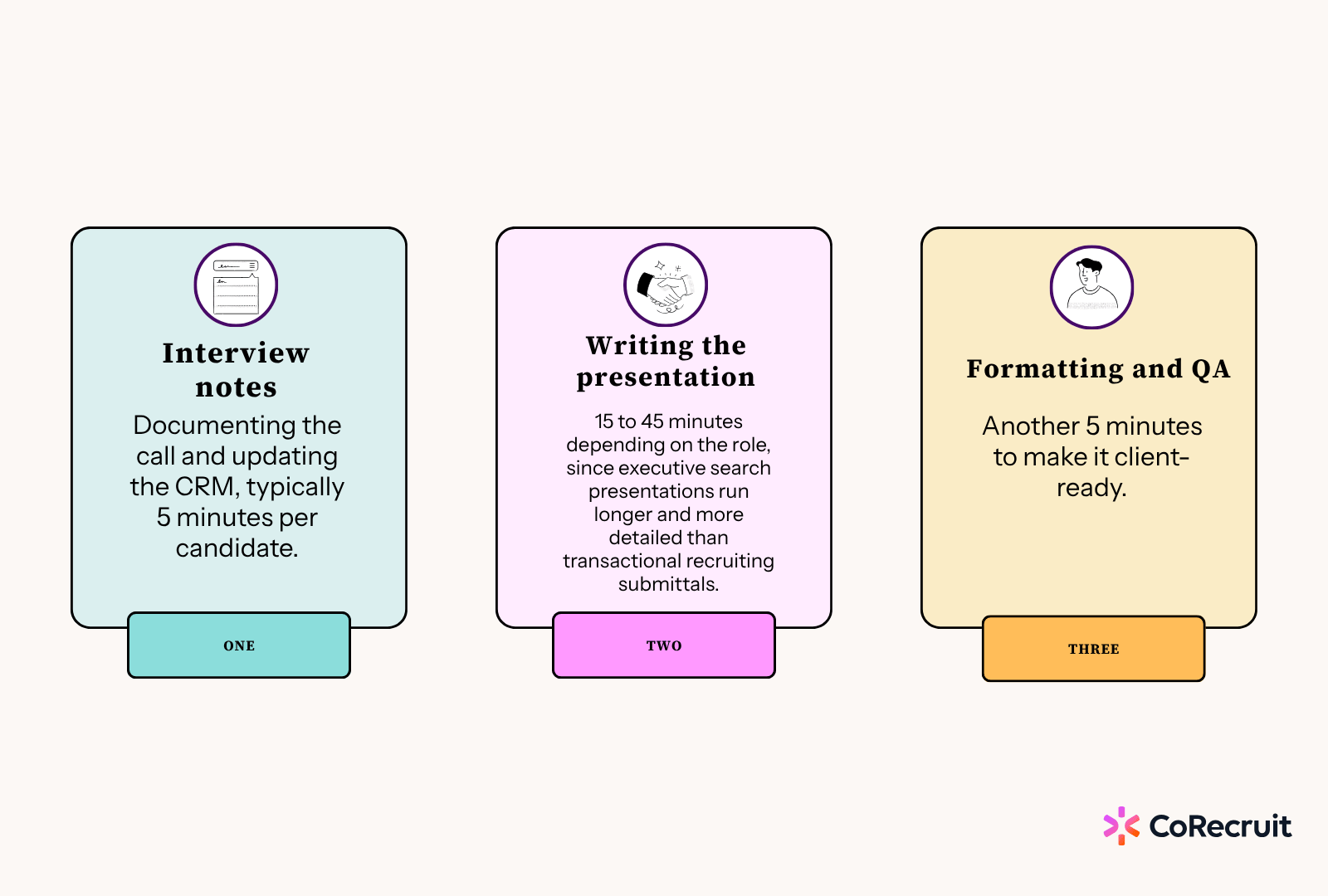
At a blended $250/hour billing rate, that's roughly $125 to $230 of consultant time per presentation before it ever reaches a client. For a firm placing five to ten candidates a month, that adds up to real annual admin cost, not counting the sourcing and client-relationship work the consultant isn't doing while they're formatting a Word doc.
The workflow breaks into five steps:
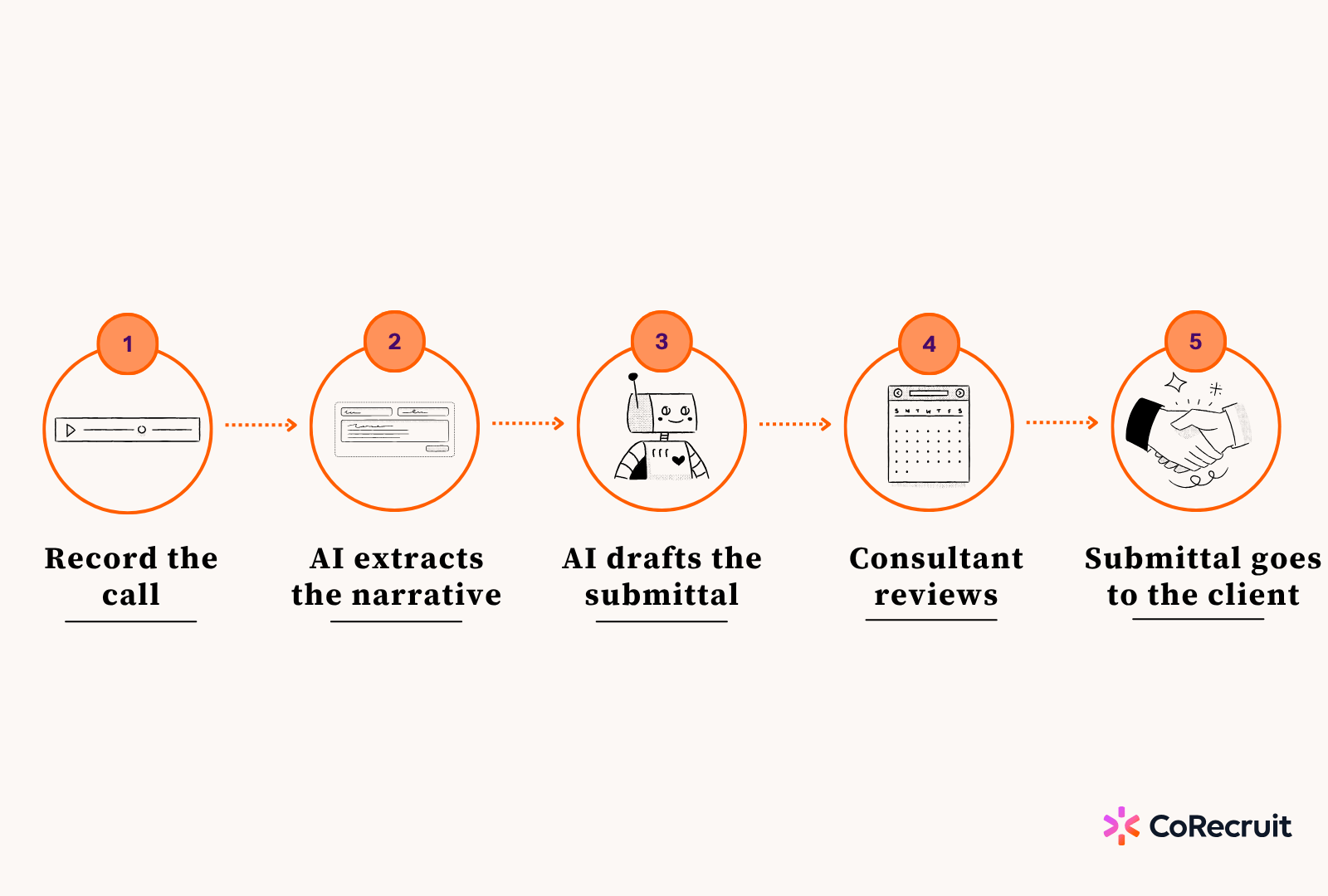
Executive search firms using this workflow report submittal prep dropping from roughly 20 to 30 minutes per candidate to 5 to 10 minutes, an approximate 75% time reduction on a task that previously ate a meaningful share of a consultant's week.
Does AI hurt the human touch in executive search?
No, and this is the objection worth addressing directly. The consultant is still doing the part of the writing that counts: deciding what story to tell and how to position the candidate. What they're no longer doing is the typing and formatting. Because the consultant isn't rushed, the presentation can end up more personalized, not less, since there's more time to think about positioning instead of racing to finish a document before a client meeting.
This is the second common objection, and the honest answer is: it can, which is why the review step exists. The AI drafts based on what was said on the call and on search-firm best practices, but the consultant reviews and customizes every submittal before it goes out. Nothing is sent automatically. The AI builds the structure and the first draft; the consultant still controls what the client sees.
For this to be useful, the candidate context from the call needs to land back in the system of record, not just live in a one-off document. Look for a tool that writes call data and candidate notes directly back into your ATS or CRM, so a candidate who isn't right for this search is still searchable and usable for the next one. CoRecruit currently integrates with 20+ ATS platforms for this kind of write-back, spanning Bullhorn and other major systems used in executive search and staffing.
.svg)


%20LG.svg)

.svg)


