6 Best AI Recruitment Platforms for Small Agencies in 2026
Josh Kirkham
Last updated:
August 2026
Read time:
11
mins
Small agencies don't have room for a tool that looks impressive in a demo and adds work in practice. Every recruiter is juggling client calls, candidate pipelines, and ATS updates without a back office to lean on.
This guide covers six platforms built for small staffing teams that rely on Microsoft Teams for collaboration. You'll find options that fit different workflows, budgets, and tech stacks.
Which AI recruitment platforms work best for small recruiting agencies?
Platform
What it does
Phone Call Recording
Candidate Submittals
CoRecruit
The best AI assistant for automating interview notes and ATS updates
Yes
Yes
Bullhorn
Established ATS with AI matching for mid-volume hiring
Via partners
No
Metaview
Interview intelligence focused on sourcing
No
No
Atlas
AI-first recruitment platform for agency workflows
Via mobile
No
Spott
Candidate matching with engagement automation
No
No
Manatal
Drag-and-drop pipelines with AI scoring
Limited
No
How we chose the best AI recruitment platforms for small agencies
Small agencies have different needs than enterprise TA teams. The bar here was set on four things:
ATS compatibility: whether the platform writes directly into the ATS agencies already run, like Bullhorn, Vincere, or Crelate, rather than asking teams to switch systems.
Real time savings: whether the automation auto-fills specific fields and generates submittals, not just a generic call summary.
Pricing for lean teams: per-user pricing and free trials, since small agencies can't take on enterprise contracts.
Recruiter adoption: setup time and learning curve, since a tool nobody opens doesn't save anyone anything.
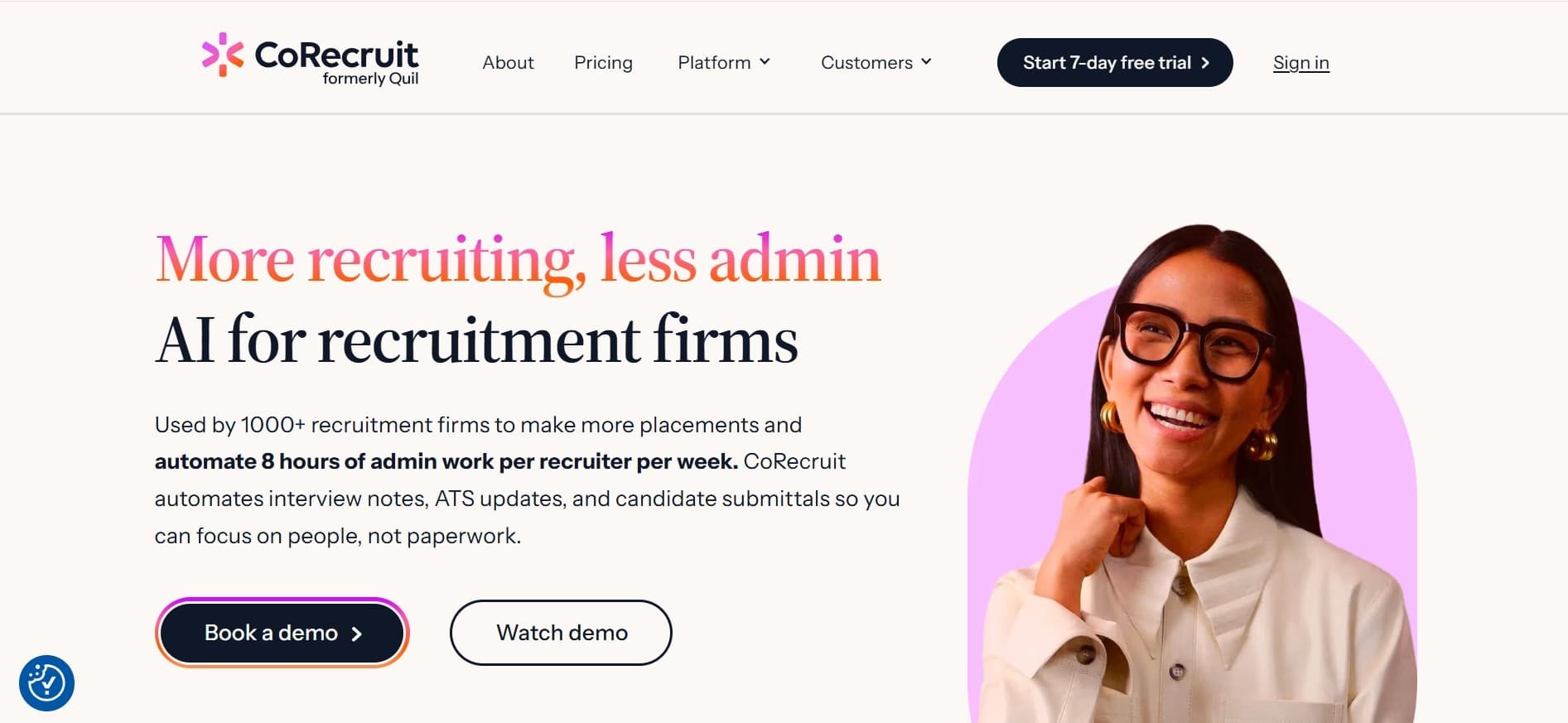
1. CoRecruit: best overall AI recruitment platform for enterprise and staffing agencies
CoRecruit is built around the specific admin work that slows small teams down: writing up call notes and drafting submittals by hand.
The platform records phone and video calls without a visible bot joining, then writes structured notes, including salary expectations, notice period, and skills, directly into the ATS record. Most notetaking tools only cover video meetings. CoRecruit also covers phone calls, which is the bigger deal here since 91% of recruiter-candidate conversations happen by phone rather than video.
CoRecruit also generates candidate submittals from the interview itself, so recruiters aren't starting from a blank page for every candidate.
CoRecruit features:
Botless call recording: Records phone and video calls in the background, with no visible participant joining.
Direct ATS write-back: Structured fields sync straight into the candidate record after a call, with Bullhorn and 20+ other ATS platforms supported natively.
Auto-generated submittals: Drafts a structured submittal from the interview instead of a recruiter writing one from scratch.
CoRecruit pros and cons:
Pros:
Covers phone calls and video meetings in one tool
73% of users report reclaiming 4+ hours per week
Native integrations with Bullhorn and 20+ other ATS platforms
Cons:
Built specifically for recruiting workflows, not general HR use
Best fit for agencies willing to route calls or interviews through the platform
Some custom ATS fields may need manual mapping depending on configuration
“Our team eliminates extra steps by syncing clear insights directly into the CRM.”- Heather T., RecruitEdge Consulting
“CoRecruit replaces messy notes with crisp, high-speed digital summaries.”- Steve Woodward, Nemo Resourcing
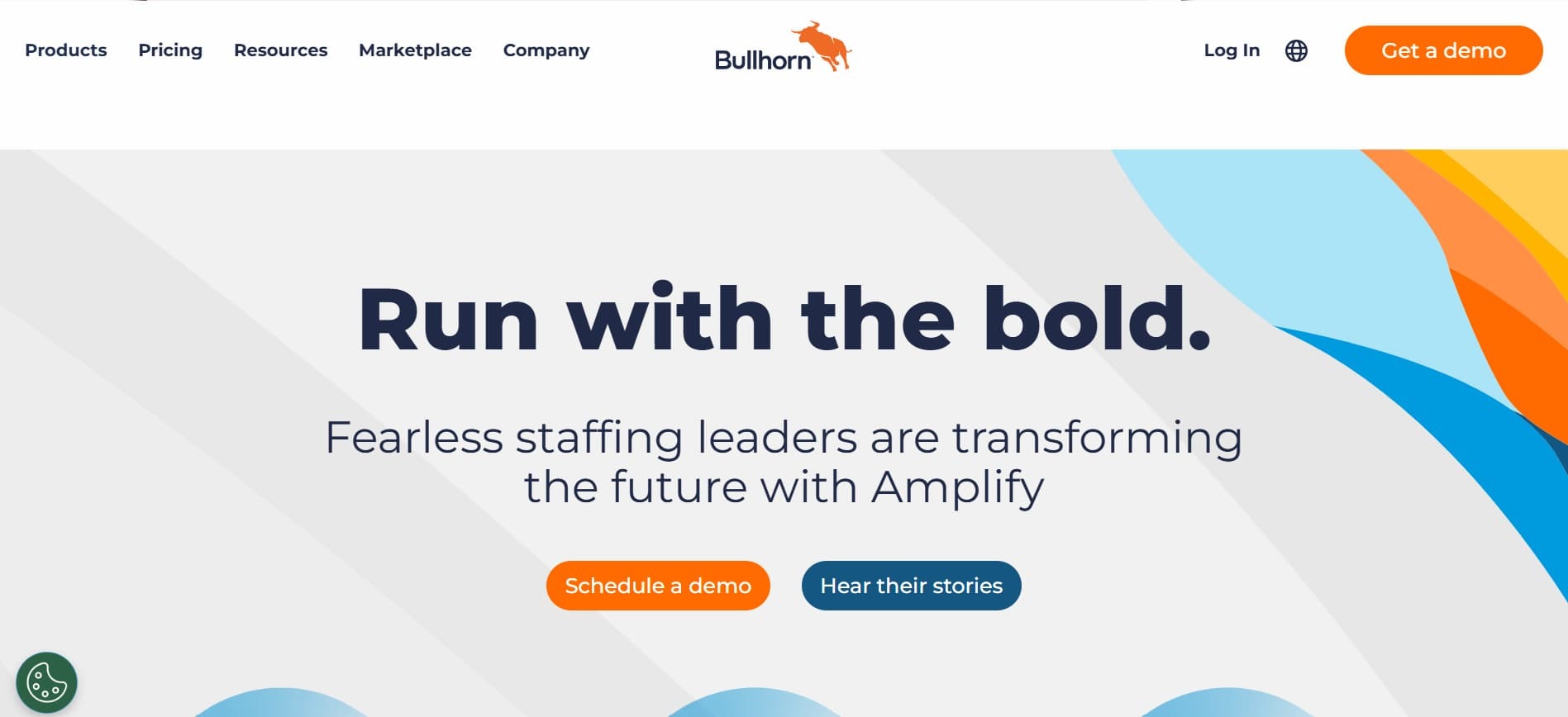
2. Bullhorn: established platform with AI matching
Bullhorn has been a staffing ATS and CRM for years. Its Amplify AI features add candidate matching and workflow automation on top of the existing platform.
For agencies already running Bullhorn as their core system, the AI layer can help resurface candidates from the existing database who match a new role.
Bullhorn features:
AI candidate matching: Surfaces relevant profiles from the database based on job requirements.
Workflow automation: Triggers follow-up actions based on candidate status changes.
Mobile access: Manage records and communications away from a desk.
Bullhorn pros and cons:
Pros:
Deep ATS functionality with a long staffing industry track record
Large marketplace of integration partners
Established training resources and community
Cons:
Pricing typically favors higher-volume agencies
AI features require a separate Amplify subscription
Interface can feel complex without dedicated admin support
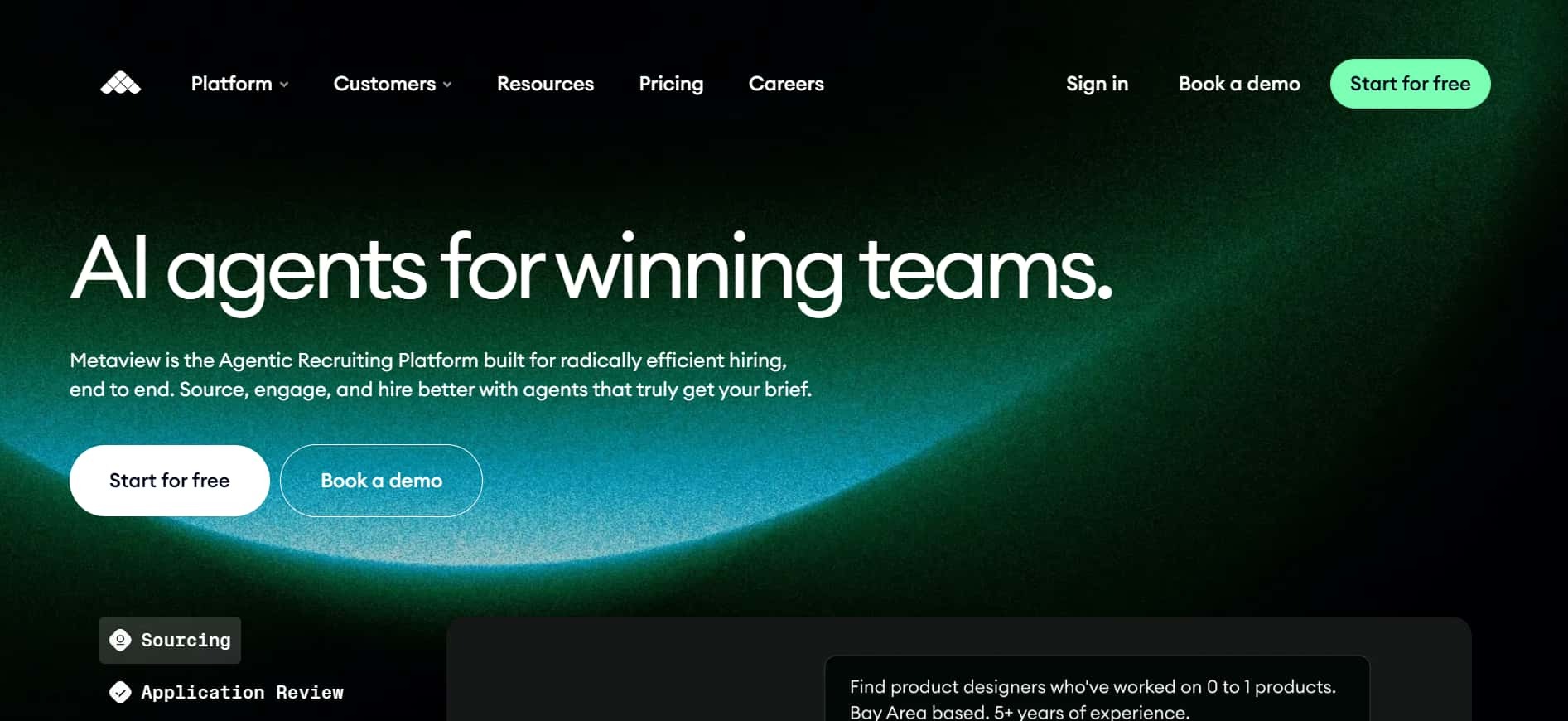
3. Metaview: interview intelligence for transcription and notes
Metaview focuses on interview intelligence: recording and transcribing conversations, then generating structured notes.
The model is trained on recruiting conversations specifically, so it can tell the difference between a screening call, a client intake, and a reference check.
Metaview features:
AI-generated notes: Summaries built around candidate strengths, concerns, and next steps.
Searchable transcripts: Pull exact quotes from past calls when prepping a candidate presentation.
ATS integration: Pushes notes to supported ATS platforms.
Metaview pros and cons:
Pros:
Purpose-built for recruiting conversations
Customizable note templates by interview type
Natural language search across past interviews
Cons:
Covers video meetings primarily, not phone calls
ATS integrations more limited than some competitors
Does not generate candidate submittals
4. Atlas: AI-first recruitment platform for agency workflows
Atlas is built from the ground up for staffing agencies, using AI agents to automate data entry, reminders, and sourcing support.
It also bundles in business development tools, which suits agencies that want client and candidate management in one system.
Atlas features:
AI agents: Automate data entry, candidate matching, and workflow prompts.
Business development tools: Track client opportunities alongside candidate pipelines.
Mobile app: Capture notes during in-person meetings with automatic sync.
Atlas pros and cons:
Pros:
All-in-one platform for candidate and client management
Visual dashboards for pipeline tracking
Multi-step outreach sequences
Cons:
Requires full platform adoption rather than layering on an existing ATS
Learning curve for teams switching from an established system
Agency-recruiting focus limits fit for in-house teams
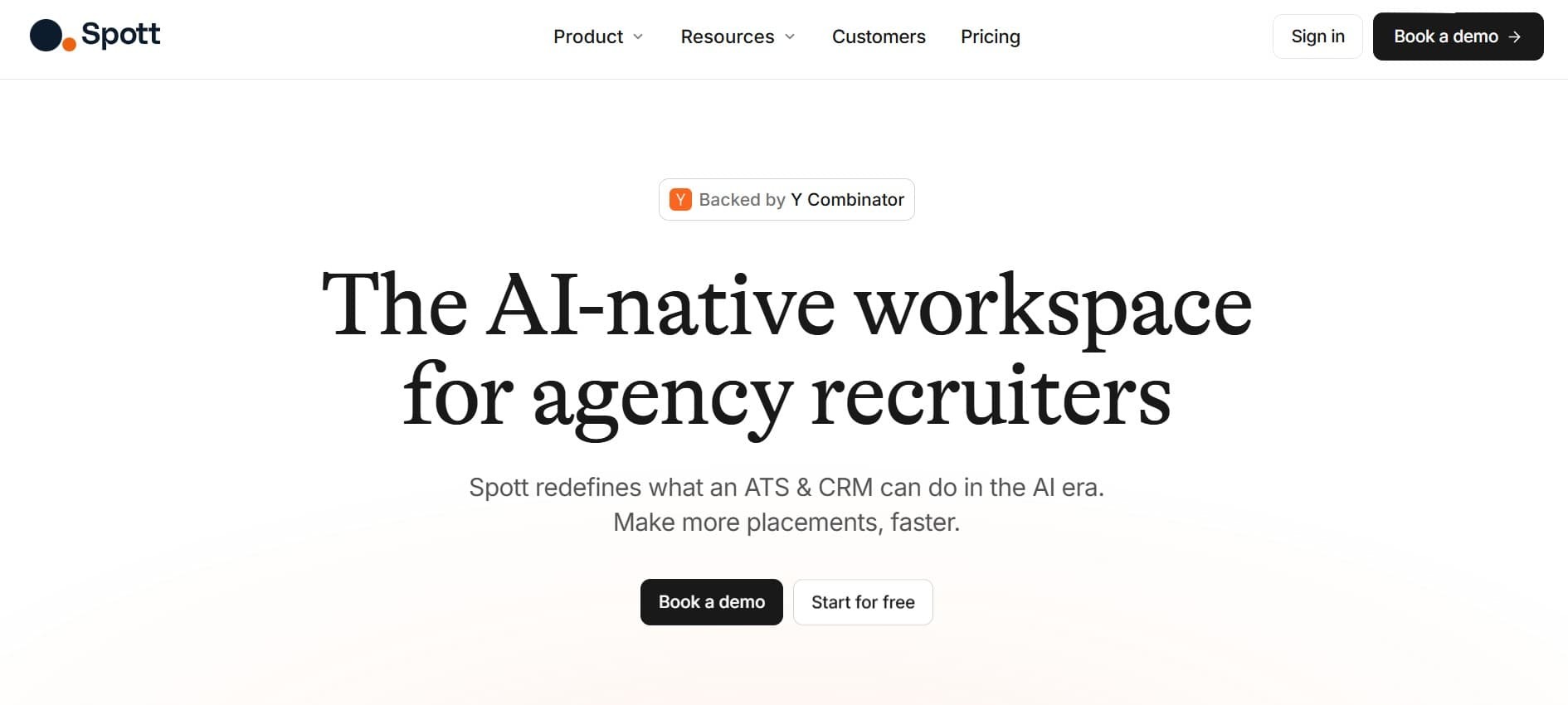
5. Spott: candidate matching with engagement automation
Spott is an AI-native ATS and CRM that emphasizes contextual candidate matching over keyword search.
For agencies juggling several open roles at once, that matching can help prioritize who to contact first for each one.
Spott features:
AI candidate matching: Scores candidates against job requirements using contextual analysis.
Engagement automation: Sends outreach sequences based on candidate fit and activity.
Pipeline management: Visual boards for tracking hiring stages.
Spott pros and cons:
Pros:
Clean interface built for recruiter productivity
Contextual matching cuts time spent on unqualified candidates
Built specifically for agency workflows
Cons:
Newer platform with a smaller customer base
Interview recording and transcription is not a primary focus
Integration ecosystem still developing
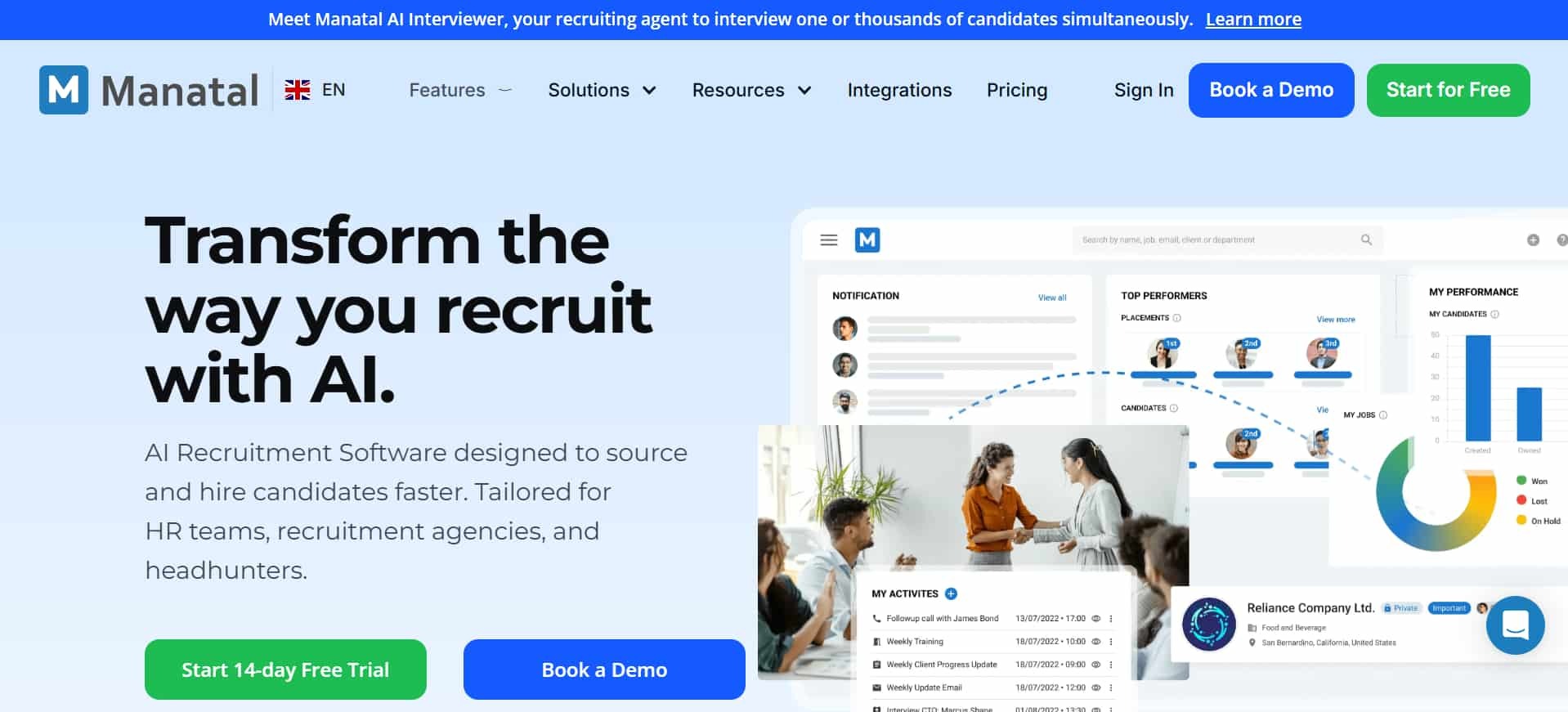
6. Manatal: drag-and-drop pipelines with AI scoring
Manatal is an accessible ATS with AI-powered candidate scoring, aimed at small teams that want modern recruiting software without a heavy implementation.
The drag-and-drop pipeline makes it easy to see where candidates stand, and AI recommendations scan job descriptions to surface matches from the existing database.
Manatal features:
AI candidate scoring: Evaluates and ranks applicants against job requirements.
Kanban pipelines: Drag candidates between stages visually.
Profile enrichment: Pulls additional candidate information from social and professional networks.
Manatal pros and cons:
Pros:
Accessible pricing with minimal training required
Clean interface
Job posting to multiple boards from one dashboard
Cons:
AI features work best with English-language resumes
Fewer integrations than enterprise-focused platforms
Limited phone call recording
What should agencies look for when evaluating these tools?
Start by mapping where a recruiter's day goes: how many hours are spent updating records versus talking to candidates and clients. If post-call notes are the biggest time sink, prioritize automatic transcription and ATS write-back. If sourcing is the bottleneck, prioritize matching against the existing database instead.
Also worth checking: whether the tool layers on top of the ATS an agency already runs, or requires replacing it. Small agencies generally do better with tools that enhance an existing workflow rather than force a full switch.
Stop letting your recruiting firm's most valuable data vanish when the call ends. CoRecruit unifies your video, mobile, and VoIP communications into a single stream of ATS-integrated intelligence.



.svg)


%20LG.svg)

.svg)


