
AI in Recruiting

Josh Kirkham

Last updated:
July 2026
Read time:
7
mins
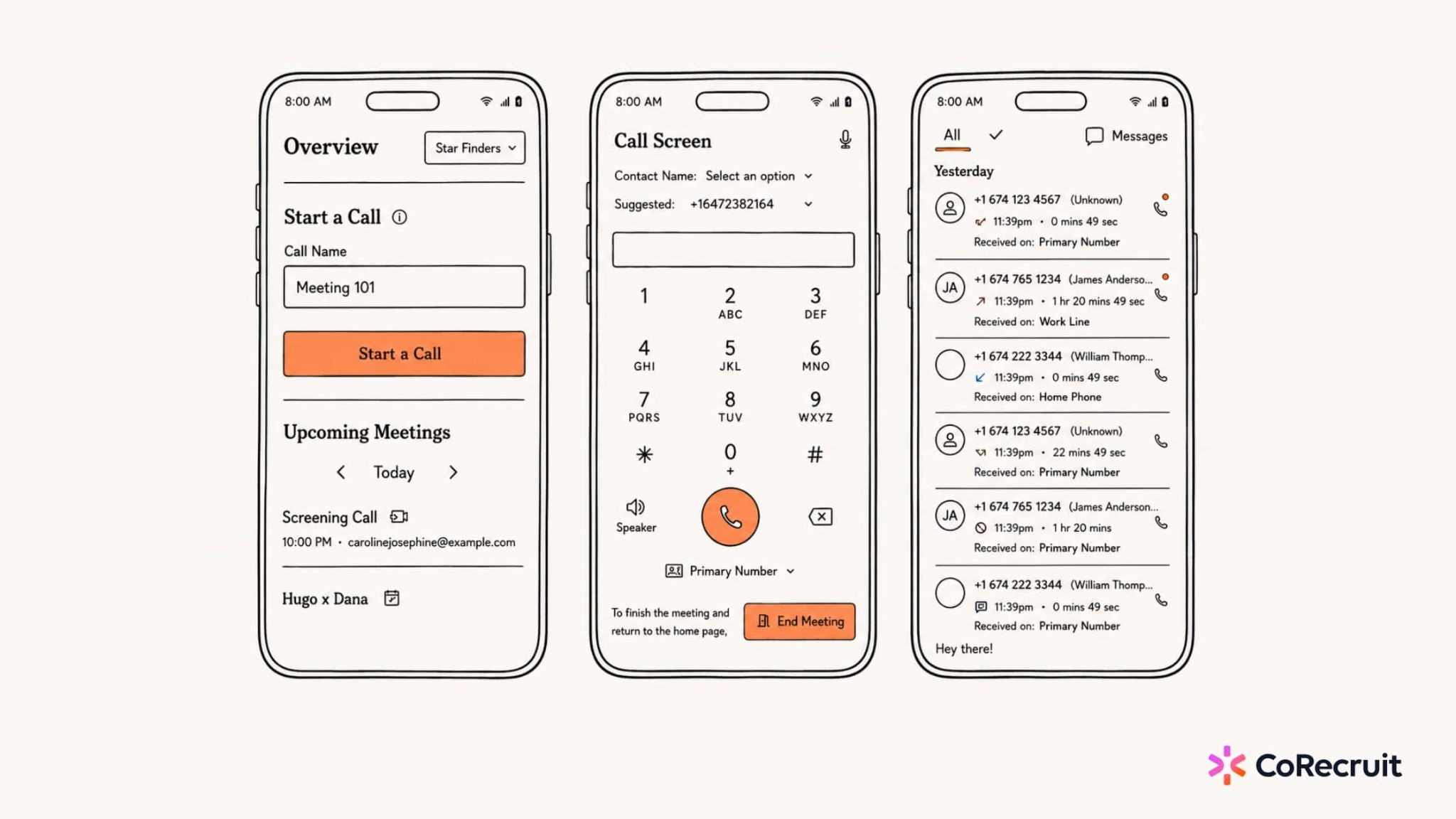
Most recruiting conversations in executive search happen on the phone, not on Zoom. Yet most AI notetakers were built for video calls. That mismatch is why so much candidate and client context never makes it into the ATS.
This guide breaks down why phone calls are the blind spot in executive search data, what botless recording solves, and how to evaluate it.
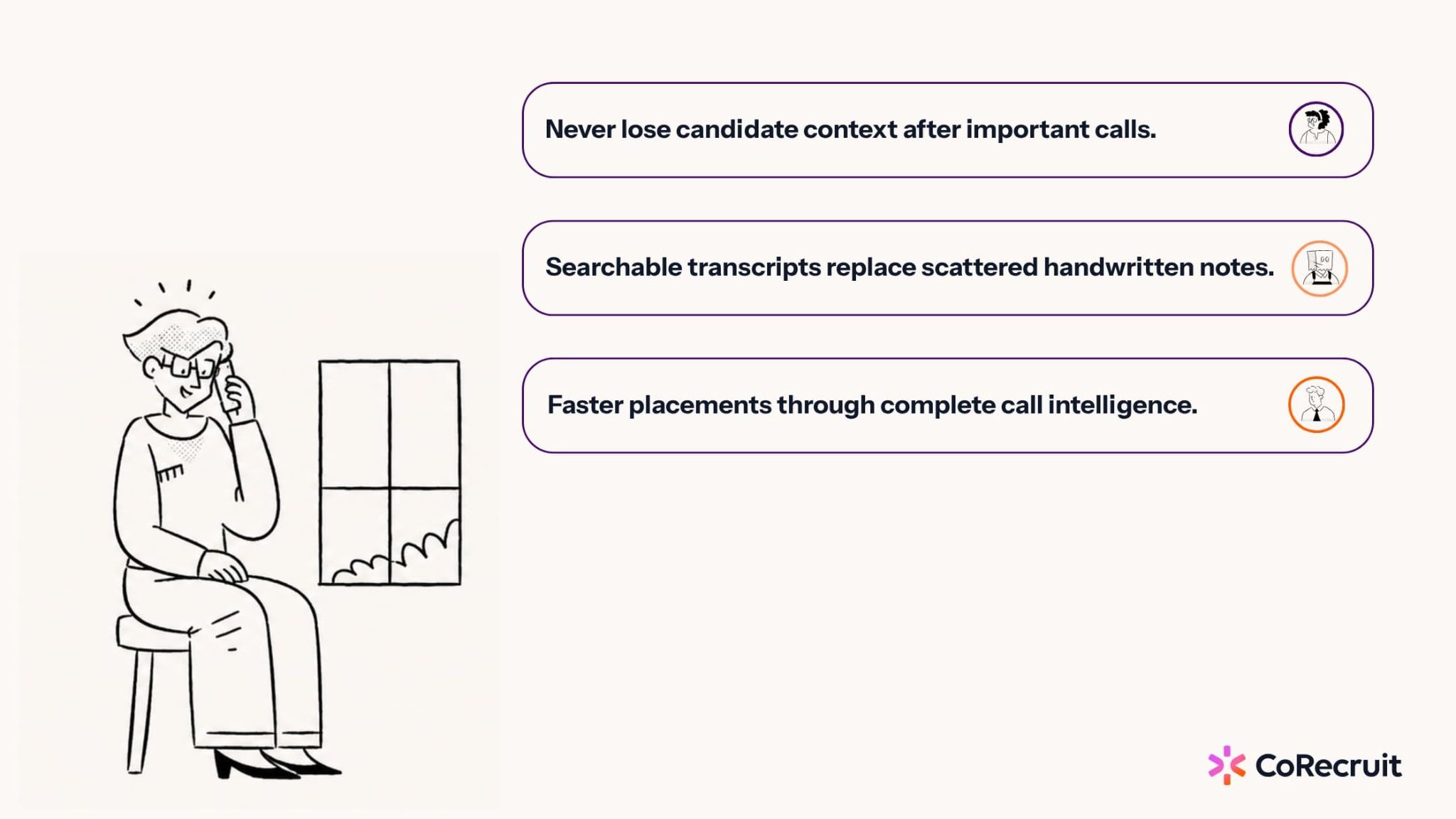
Executive search runs on relationship-driven, off-the-record conversations, often taken while a partner is walking between meetings or driving to an airport. Video-first tools like Fireflies, Otter, Metaview and Fathom cannot record those calls, because there is no meeting link to join.
Three case studies show what changes once phone calls stop going unrecorded. (Figures below are specific to each firm, provided as part of their case study. Across CoRecruit's broader customer base, 73% of users report saving 4+ hours per week.)

Problem: partners traveled constantly, and calls made from cell phones never reached their ATS (Invenias).
Solution: botless mobile recording.
Result: CIO Kirk Couser reported it "drastically improved our data integrity," which cut both search time and placement time.
Full testimonial here.

Problem: delays logging information created compliance risk.
Solution: a system that listens on the call and transfers data into the ATS without extra steps from the recruiter.
Result: Director of Technology Justin Doyle said the change removed the manual note-taking bottleneck entirely.
Full testimonial here.
Problem: Principal Troy Hendrickson was working from stacks of paper notes.
Result: After switching to automatic call summaries posted straight to the CRM, the firm reports recruiters saving 5 to 8 hours a week that used to go to manual data entry.
The data points to the latter. 63% of employers say finding strong candidates is harder than it was last year, and 70% of job seekers say landing a role is harder too. Both sides struggling at once points to a breakdown in matching, not a shortage of people or jobs. Recruiters using botless AI can pull the "why" behind a candidate's fit directly from phone conversations, which is exactly the detail needed to narrow that 63/70 mismatch.
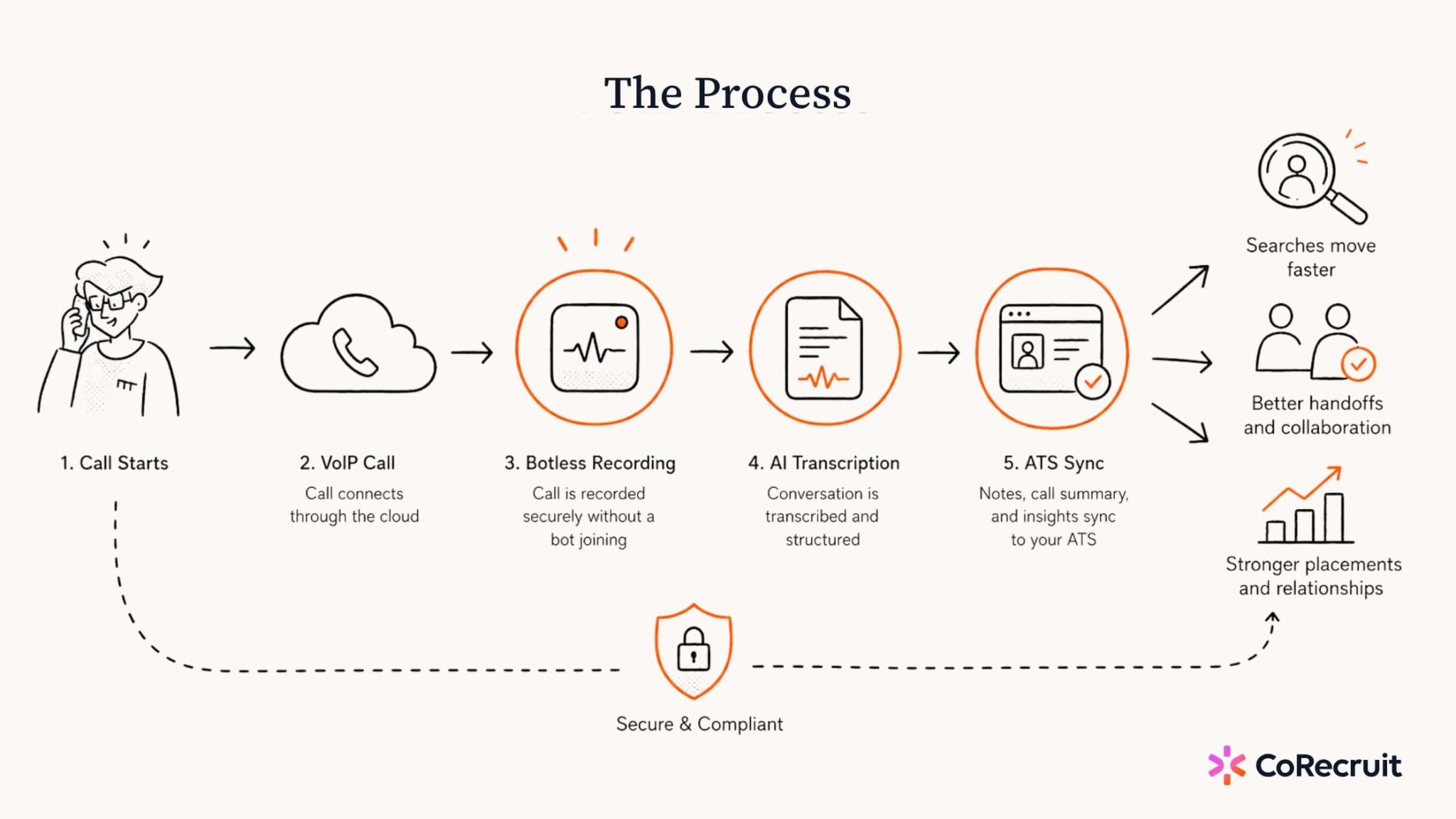
A working checklist for evaluating any AI recording tool for search firms:
It depends on the state, and getting this wrong is a real liability, not a technicality.
The safest approach regardless of state is a short, plain disclosure at the start of the call: "Just so you know, I'm recording this to stay focused on the conversation instead of taking notes, is that okay?" Decline rates for that kind of disclosure in executive search are typically under 2%.
Disclaimer: this section is provided for general informational purposes and is not legal advice. Recording laws vary by state and can change, and some calls may cross state or international lines, which adds another layer of complexity. Firms should confirm current requirements with legal counsel before relying on any consent framework described here.
Our sources:
Recording Phone Calls and Conversations Under the Law: 50-State Survey
.svg)


%20LG.svg)

.svg)


